Since it’s April Fool’s Day, and Tumblr is sending images of lizards screaming across all our dashboards at hyper-light speeds, I thought it would be a good time to talk about a lizard who April Fooled the entire paleontological community, long before the Mop/Wretched Tooth divide threatened to send our sociopolitical infrastructure crumbling to the ground.
Is it a tenuous connection? Yeah, but I was gonna make this post anyway, so live with it!
Longisquama lived during the Triassic Period, 235 million years ago, in modern-day Kyrgyzstan. It might have been a lizard, as I asserted above, but its place within Reptilia is actually quite uncertain; the only thing known for certain is that Longisquama is a “diapsid reptile”, meaning it could be a squamate, a rhynchocephalian, a crocodilian, or a pre-dinosaur.
Longisquama is distinguished by the row of strange appendanges growing from its back. The purpose of these appendages is uncertain, and has long been the subject of much paleontological debate.
The most iconic version of Longisquama depicts it with twin rows of appendages, rather than the single row preserved in the only known fossil specimen, and shows it using these twin wing-like structures to glide. While this is almost certainly not the case, numerous supposedly serious paleontologists – including Dougal Dixon, speculative evolution writer and long-time peddler of insane made-up garbage – have espoused the theory that Longisquama is the true ancestor of birds.
This makes absolutely zero sense from an anatomical perspective, and was essentially nothing more than a very convenient way for a bunch of die-hard dinosaur traditionalists to deny that birds were the descendants of dinosaurs. Even so, this debate raged on until the shockingly recent year of 2006.
At that time, new studies of the single Longisquama fossil found that the appendages weren’t part of the animal’s body at all.
You can recycle cigarettes through a
free program offered by Terracycle.
Music strings, pens and markers, energy
bar wrappers, chip bags, drink pouches,
toothpaste tubes, and electronic waste
can also be recycled by printing a free
shipping label through the company. Source
on the 28th of april, 2011 ce, shadow chancellor of the exchequer edward michael balls tweeted his own name in a moment of unsurpassed mastery of both metaphysics and social media.
every year, the british public come together to celebrate this momentous occasion. it is customary for brits to greet each other on this day with the ritual greeting, “ed balls be with you”, and to reply “and also with you”.
may this ed balls day bring you peace, prosperity, and ed balls
No, trigger warnings are not, by themselves, censorship.
Stephen Fry was being a complete turd cabbage in his article.
But there was discussion of whether the concept of triggers and
content warnings can go too far, and if we can reach a point where it
all becomes damaging. One individual pointed to an article in the
Atlantic as an example that was “better informed”: The Coddling of the American Mind: How Trigger Warnings are Hurting Mental Health on Campus, by Greg Lukianoff and Jonathan Haidt.
I started trying to respond to some of the points in that article,
and after 1000 words, had only gotten through the first few paragraphs.
So I’m trying a different approach, and zooming in on just one of their
arguments:
[T]here is a deeper problem with trigger
warnings. According to the most-basic tenets of psychology, the very
idea of helping people with anxiety disorders avoid the things they fear
is misguided. A person who is trapped in an elevator during a power
outage may panic and think she is going to die. That frightening
experience can change neural connections in her amygdala, leading to an
elevator phobia. If you want this woman to retain her fear for life, you
should help her avoid elevators.
But if you want to help her return to
normalcy, you should take your cues from Ivan Pavlov and guide her
through a process known as exposure therapy.
NO YOU SHOULD NOT, BECAUSE YOU ARE NOT A THERAPIST!!!
(If you are a trained and licensed therapist, please replace the previous statement with, NO YOU SHOULD NOT, BECAUSE YOU ARE NOT HER THERAPIST!!!)
Exposure Therapy and Systematic Desensitization are processes. They’re done in a controlled environment, with preparation and planning, which includes letting the patient know what’s coming. I.e., giving them a warning.
You might as well say, “Hey, Electroconvulsive Therapy is still
sometimes used to treat depression, and you’ve been feeling down, so I’m
gonna plug in this toaster and drop it into the bath with you!”
As someone who earned a degree in psychology, has been a rape counselor, has been in
counseling, and married a license therapist, do me a favor and knock it
off with the armchair psychologist crap before you seriously hurt
someone.
The United States of America is only one of two countries that has not approved and accepted the Convention on the Rights of the Child. The other is South Sudan, which has already begun the ratification process.
Among other things, the CRC ensures children under the age of 18 have the right to life, identity and name, education, freedom of expression, equal opportunity, healthcare, psychological recovery, cultural sensitivities for minority/indigenous groups, and access to information [x].
The lack of the CRC in the USA is part of the reason why it is okay to send children to abusive “camps” that attack their identity as LGBTQ+ minorities, enroll them in private schools that intentionally deny students opportunities to learn about science (particularly anatomy and sexuality), and sign away their children’s rights to the state.
It is also why juveniles in the USA can be sentenced to life imprisonment with no chance of parole, a legal implications that particularly affects people of color, especially Black and Latinx children.
The CRC also specifies that children should not be disciplined in a manner that is considered abusive, and the USA therefore does not regulate the “discipline” occurring in homes of at-risk children, even when it qualifies as mental or emotional abuse.
Due to the lack of the CRC, children can be relocated against their will (eg, deportation/trafficking) to potentially dangerous and life-threatening places, can be separated from their parents, or can be kept in isolation.
Basically, the United States, which claims to be a great champion of human rights, has consistently refused to ratify or even introduce the bill to ratify the Convention of the Rights of the Child.
Update on this (2016): USA is now the only country not to ratify the CRC. [x]
Over half of public school students are poor enough to qualify for lunch subsidies, and almost half of black children under the age of six are living in poverty. [x]
The US is one of two “developed” country with the lowest standards for child well-being (Romania is the other). [x]
16 million kids live in poverty and 138 thousand kids are homeless (2013-2015). [x]
Homelessness in children has increased by 60% in the past 6 years. [x]
In 2001, 325,000 children were at risk for becoming victims of sexual exploitation in the United States. [x]
Of all sex trafficking victims in the USA: 17% are underage girls and 10% are underage boys. [x]
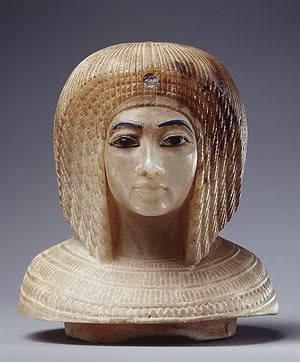
do you want to know something?? I always wondered what the hell kind of hairstyle the Ancient Egyptians were trying to portray with depictions like these
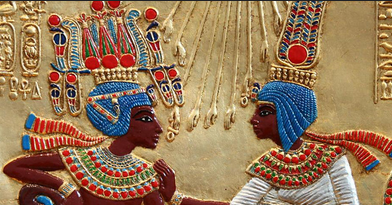
and this
until I did my hair this morning and
oh
welp
you can take the noses off our statues but until you find a way to take Egypt out of Africa we’re still going to find ourselves
I’m reblogging this post without all the salty, racist commentary because I’m sick of looking at it. please spread this around again in its pure form for posterity.
What’s funny is that white people thought they were hats/crowns ????
And here’s some pictures of the Afar people, who still live on the horn of Africa today.
Cool, huh?
Beautiful
People thought it was Hats and Crowns? How could they not see hair?
The same reason archaeologists, upon finding a woman’s skeleton in the grave of a famous Roman gladiator, immediately wondered where the gladiator’s skeleton was: Old Straight White Man™ brand denial.
Okay, this is in incredibly petty nitpick, but: if you’re writing a fantasy setting with same-sex marriage, a same-sex noble or royal couple typically would not have titles of the same rank – e.g., a prince and a prince, or two queens.
It depends on which system of ranking you use, of course (there are several), but in most systems there’s actually a rule covering this scenario: in the event that a consort’s courtesy title being of the same rank as their spouse’s would potentially create confusion over who holds the title by right and who by courtesy, the consort instead receives the next-highest title on the ladder.
So the husband of a prince would be a duke; the wife of a queen, a princess; and so forth.
(You actually see this rule in practice in the United Kingdom, albeit not in the context of a same-sex marriage; the Queen’s husband is styled a prince because if he were a king, folks might get confused about which of them was the reigning monarch.)
The only common situation where you’d expect to see, for example, two queens in the same marriage is if the reigning monarchs of two different realms married each other – and even then, you’d more likely end up with a complicated arrangement where each party is technically a princess of the other’s realm in addition to being queen of her own.
You’ve gotta keep it nice and unambiguous who’s actually in charge!
Okay, I’ve received a whole lot of asks about this post, so I’m going to cover all of the responses in one go:
1. The system described above is, admittedly, merely one of the most common. Other historically popular alternatives include:
The consort’s courtesy title is of the same rank as their spouse’s, with “-consort” appended to it: prince and prince-consort, queen and queen-consort, etc. This is how, e.g., present-day Monaco does it.
The consort is simply styled Lord or Lady So-and-so, and receives no specific title. I can’t think of any country that still does it this way, off the top of my head, but historically it was a thing.
(Naturally, your setting needn’t adhere to any of these, but it would be highly irregular for it to lack some mechanism for clarifying the chain of command.)
2. The reason why the consort of a prince is historically a princess even though those titles are the same rank is basically sexism. This can go a couple of ways:
In many realms, there was no such thing as being a princess by right; the daughter of a monarch would be styled Lady So-and-so and receive no specific title, so the only way to be a princess was to marry a prince.
In realms where women could hold titles by right, typically a masculine title was informally presumed to outrank its feminine counterpart. So, e.g., kings outrank queens, princes outrank princesses, etc.
In either case, no ambiguity exists.
(Interestingly, this suggests that in a more egalitarian setting where masculine titles are not presumed to outrank their feminine counterparts, or vice versa, you’d need to explicitly disambiguate rankings even outside the context of same-sex marriages. Food for thought!)
3. It would also be possible to have two kings or two queens in the same marriage without multiple realms being involved in the case of a true co-monarchy. However, true co-monarchies are highly irregular and, from a political standpoint, immensely complicated affairs. If you’re planning on writing one of those, be prepared to do your research!
4. The next rank down from “countess” is either “viscountess” or “baroness”, depending on which peerage system you’re using.
(Yes, that last one actually came up multiple times. Apparently there are a lot of stories about gay countesses out there!)