I don’t post selfies for stuff like tdov because I’m white, have enough money to survive, and pass 100% – my life these days is about as low-risk as it’s possible for a trans woman’s to get, absent suddenly becoming rich. I am phenomenally lucky, and don’t feel like my demographic is one that needs elevating.
Sometimes, like the one-time urge to run a trans youth support group, I feel like I should do more. Then I remember that I’m brown, have enough money, and pass 100%. Then I think I’ll stick with challenging people who say unpleasant things, and protesting in my polite, English, middle-class way. Which I admit is selfish, but also, I like not being out a lot of the time.
Well, maybe not 11. Maybe something like 7. Perhaps.
I made a list of things to do today, and I’ve done many of them. I hoovered the house – the new Roomba is yet to prove its worth, waiting as it is for me to steel myself to order it a new aerovac dust bit. See, the filter in it is filthy, which is, I suspect why it sucks, rather than sucks. Also, the battery is on its last legs. Both of these are fixable, and indeed, far less work than I was expecting. I got it as a project, plugged it in to charge over night after it arrived, and the next day it worked. Well, as I say, it kind of moved the dirt around rather than actually sucking it up. It seems to particularly struggle with pine needles, which shouldn’t really be a huge problem in the PNW. I mean, it’s not like we have many pine needles to clean up*. Anyhow, so I’m trying to decide whether to fork out $35 for the new aerovac bin which should upgrade its suction and means I’d get a new filter, or just to try a new filter in the existing bin. I’m inclined towards the former. But it’s being mulled at the moment. I’m also debating the new battery options. Real? Clone? Lithium ion? NiMH? Oh, the choices. Anyhow, so to go back to the story, I hoovered, rather than than the Roomba doing so.
Anyhow, I then set to on RebeccaMog, who’s leaking screen I attacked with vim and vigour. The sealant had failed all the way down one side and some of the way down the other side. I’m not sure whether I’ve fixed it, I do know that I now need something to dissolve silicone sealant from where it managed to run. I scrabbled around attempting to remove it, but in the heat of the sun it dried before I could get it done…
…I then did a bunch of unexciting admin-y things that needed doing.
…then I spent some time on the project for our business which had been driving me nuts and making me think I’d forgotten everything I’d ever known about electronics (rather than nearly everything, which I’m willing to accept that I’ve forgotten). Eventually I did get it working, which has pleased me no end, although the power supply does still honk from cigarette smoke. I ended up leaving it outside for a few hours in the hope that might fix it, but still absolutely reeks.
Then I stripped and cleaned the keyboard from Goodwill – so that I could start work on the media PC, which is now up and running. But unfucking the mess I made of it before we moved (I shuffled files for various reasons, then ran out of disk space), is turning into a hideous nightmare. Not aided by the fact that something, I have no idea what, is consuming vast amounts of disk activity, and making it periodically unusable. And by ‘periodically’ I mean ‘for long blocks of time – most of the time that it’s on’. I’ve checked using top and it’s not exactly a processor usage problem.
I have absolutely no idea what its doing though.
Which is doubly upsetting because I would like to move some files around.
At the moment I’m trying ‘patience’ to see if leaving it for a long time does the job.
It is at least running though.
* Ha hahahahahahaha. Aaaaaah hahahahaha. Ha! No one warned me about this.
It’s impossible to ignore the racism of this year’s Presidential race; Donald Trump will say anything, it seems, to gain support from the many Americans who truly believe that we need to build a wall at the Mexican border and that deporting all Muslims would somehow end terrorism. It’s sickening and it’s rooted in a legacy of xenophobia.
Image: MOHAI
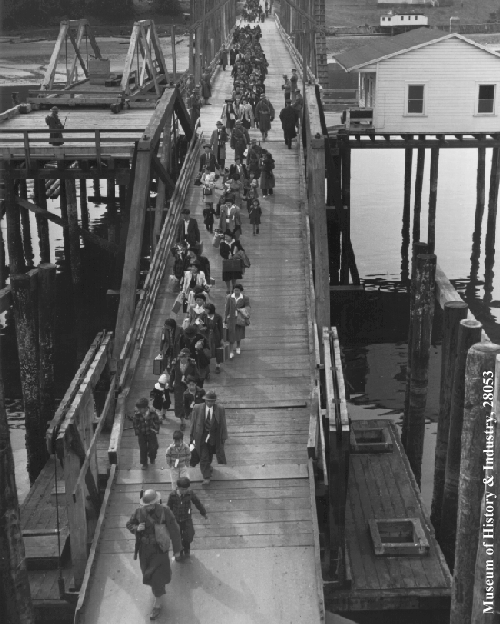
It’s also familiar as hell, particularly along Puget Sound, where, 74 years ago today, Japanese and Japanese-American residents of Bainbridge Island—some who had been there for six decades and many who were born there—were wrenched from their homes and send to an internment camp under Executive Order 9066.
They were the first in the nation to be interred, due to Bainbridge’s proximity to a military base, and were given just six days to get their business and personal affairs in order. They had no idea how long they would be gone, or where they were going. Via the UW:
The Bainbridge Islanders, both aliens and non-aliens (i.e., citizens), were given six days to register, pack, sell or somehow rent their homes, farms and equipment. On Monday, March 30 at 11:00 a.m. these Japanese Americans, under armed guard, were put on the ferry Keholoken to Seattle where they boarded a train to Manzanar in central California. They were not to return to Bainbridge Island for more than four years.
Executive Order 9066 was written to protect “against espionage and against sabotage to national-defense material, national-defense premises, and national-defense utilities”—exactly the same reasons Presidential candidates like Trump give for the expulsion of Muslims—but what it really did was grant the U.S. government the authority to discriminate against American citizens and immigrants based on literally nothing but their race. It was an order that was the direct result of fear and intolerance.
The majority—a full 2/3—of the residents interned were American citizens.
There was a great gathering of white friends at Eagledale before the evacuation was completed. These friends, as well as soldiers, gave the departing Japanese every help.
It was a pathetic exodus.
There were mothers with babies in arms, aged patriarchs with faltering steps, high school boys and girls, and some children, too young to realize the full import of the occasion. The youngsters frolicked about, treating the evacuation as a happy excursion.
“Tears, Smiles Mingle as Japs Bid Bainbridge Farewell.” Seattle Times, March 30, 1942, pg. 1.
On Bainbridge Island—and up and down the West Coast—this action ravaged communities, separated families and friends, and financially ruined many individuals and businesses.
In 1983, it was estimated that the total economic fallout was something like $2 billion.
At the time, racism was rampant locally—but there were still some voices in support of the residents of Bainbridge Island, of Seattle, and of surrounding areas who were being threatened with internment.
After the first announcement of the executive order in February 1942, the only West Coast newspaper editors to write against internment were Walt and Milly Woodward of the Bainbridge Review. In their editorial they wrote that they “hope that the order will not mean the removal of American-Japanese citizens, for it [the Review] still believes they have the right of every citizen: to be held innocent and loyal until proven guilty” (“Not Another Arcadia”).
In total, 277 residents were forcibly removed from the island, sent to camps in California and Idaho, for the duration of World War II. Just 150 returned to Bainbridge when, years later, they were permitted to go home.
On the memorial that now stands near where the residents of Bainbridge were walked down a pier toward the ship that would carry them away, visitors can clearly read the words “Nidoto Nai Yoni.”
“Let It Not Happen Again.”
Despite the cutting of checks and an apology from Ronald Reagan, it’s evident that simply acknowledging our history isn’t enough to keep from repeating it.
Here in the Seattle area and throughout the nation, we are precariously permissive of rhetoric that not only condones but supports letting it happen again.
The United States of America is only one of two countries that has not approved and accepted the Convention on the Rights of the Child. The other is South Sudan, which has already begun the ratification process.
Among other things, the CRC ensures children under the age of 18 have the right to life, identity and name, education, freedom of expression, equal opportunity, healthcare, psychological recovery, cultural sensitivities for minority/indigenous groups, and access to information [x].
The lack of the CRC in the USA is part of the reason why it is okay to send children to abusive “camps” that attack their identity as LGBTQ+ minorities, enroll them in private schools that intentionally deny students opportunities to learn about science (particularly anatomy and sexuality), and sign away their children’s rights to the state.
It is also why juveniles in the USA can be sentenced to life imprisonment with no chance of parole, a legal implications that particularly affects people of color, especially Black and Latinx children.
The CRC also specifies that children should not be disciplined in a manner that is considered abusive, and the USA therefore does not regulate the “discipline” occurring in homes of at-risk children, even when it qualifies as mental or emotional abuse.
Due to the lack of the CRC, children can be relocated against their will (eg, deportation/trafficking) to potentially dangerous and life-threatening places, can be separated from their parents, or can be kept in isolation.
Basically, the United States, which claims to be a great champion of human rights, has consistently refused to ratify or even introduce the bill to ratify the Convention of the Rights of the Child.
Update on this (2016): USA is now the only country not to ratify the CRC. [x]
Over half of public school students are poor enough to qualify for lunch subsidies, and almost half of black children under the age of six are living in poverty. [x]
The US is one of two “developed” country with the lowest standards for child well-being (Romania is the other). [x]
16 million kids live in poverty and 138 thousand kids are homeless (2013-2015). [x]
Homelessness in children has increased by 60% in the past 6 years. [x]
In 2001, 325,000 children were at risk for becoming victims of sexual exploitation in the United States. [x]
Of all sex trafficking victims in the USA: 17% are underage girls and 10% are underage boys. [x]
Not to mention leaving open thighs and arms in critical areas with no armour.
Sure just go sword fight people with arteries available for them to stab it’s fine. So long as men get to see you’re women and you’re sexy it’s fine.
The only reason I can see to leave your legs exposed like that is to air out the privates since that island is probably hot af. I’d probably go around wearing a dress and sandals all day if I was told I couldn’t be naked.
Aren’t the Amazons based in Greek mythology? If so, weren’t there gladiatorial fights where women could be naked too? If so, technically they could all just be fighting naked. It’s only training and they’re friends/comrades in arms.
I do have a beef with them high heeled boots though. Fairly sure the didn’t have those in Greek times. So inaccurate.
(If anything and everything I’ve typed here is untrue, feel free to correct me politely or with funny af gifs XD)
OMG I’m a classicist this is my JAM
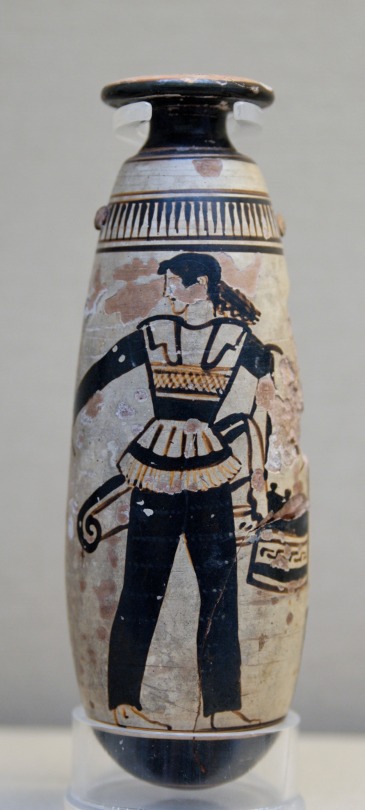
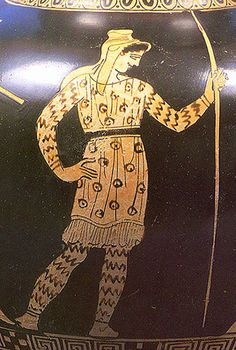
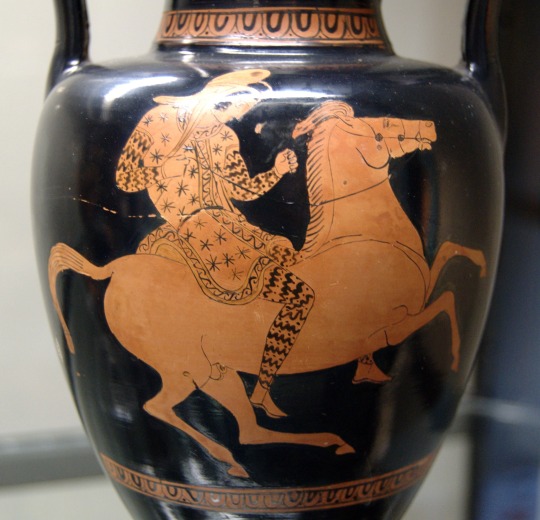
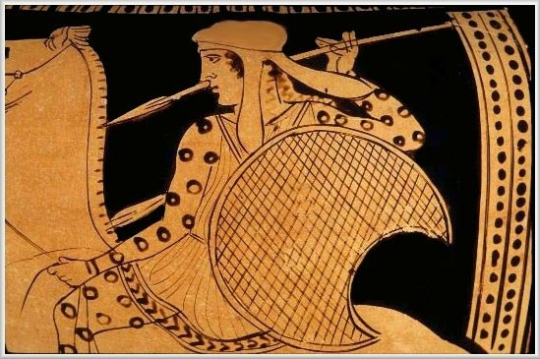
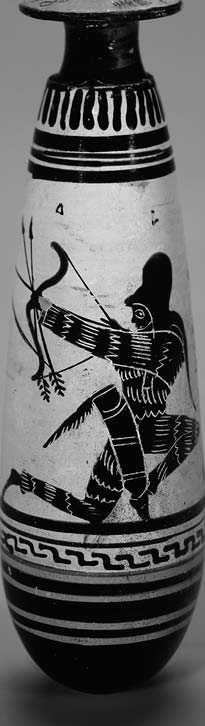
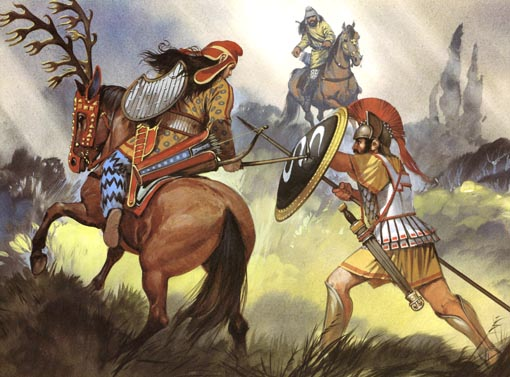
You aren’t the wrongest. (You are the rightest about the high-heeled boots. Those are a nope in terms of practicality and historicity). The Amazons were a semi-mythic group of warrior women who hailed from Thrace and/or Scythia (basically, “North-east ish”). Whether there actually were warrior women from that area is debatable. Greek depictions of Amazons varies quite a bit. In early art, they were depicted as female versions of Greek hoplites, with the same costume- think tunic-y thing with very short skirt, torso armor (but not with boob cups, and definitely covering the shoulders because how the hell else it it gonna stay up), greaves, helmets, big-ass shields, and knifesticks spears.Over time, elements of Thracian and Scythian costume made their way into depictions of Amazons- things like bows and javelins, a fuckton of horses, patterned tunics, boots, pointy hats, and stripey pants. And maybe tattoos (It’s kinda hard to tell if some craftsmen were trying to depict sleeves and sucked at it, or were genuinely trying to draw people with ink in their skin). The most common depiction of Amazons was as an archer on horseback, with a recurve bow, wearing long-sleeved tunic, belt, furry hat, trousers, and boots. Optional but popular is a half-moon shield.
This one’s pants are boring, but you can see her quiver kinda behind her:
This one clearly shows the hat, pants, tunic, and sassy attitude:
On a horse, bomb-ass christmas tunic, fancy pants fancier than any fancy pants you will ever wear:
horse, half-moon shield, aerial knifestick javelin, complete lack of fucks:
pants and/or furry onesie, big hat, recurve bow, ancient speed-shooting techniques only recently rediscovered:
As for nudity, Amazons were rarely depicted naked (except for the odd stray boob) until the Hellenistic era (300?s BC), and on into the Roman Era, especially during it’s midlife crisis phase (the century surrounding 0 AD, roughly) and it’s post-midlife-crisis have-sex-with-everyone, kill-all-your-neighbor’s-chickens-and-eat-them-deep-fat-fried-all-at-once, act-surprised-when-you-contract-500-venereal-diseases-and-clog-your-arteries phase (Nero-ish onwards-ish. And yes, that is definitely the actual term used to refer to that period of Rome’s history, and not simply a sweeping generalization).
Gladiators were purely a Roman thing. You do get arenas and gladiators in Greece and Turkey and whatnot, but that’s only because the Romans invaded and put them there because bloodsport made them less homesick or something, I guess. Female gladiators were certainly a thing, and may have fought naked for entertainment value (TBH I’m too lazy to go look it up at the moment), but the thing is, gladiatorialism was a sport, just like modern taekwondo, judo, and fencing are sports. Yeah, people are going to get injured, but they didn’t die nearly as often as our modern popular image would have you think, and their fighting style wouldn’t really be all that useful on a battlefield, because they had rules to follow and their purpose was NOT to kill their opponent, but rather to provide an entertaining fight. Gladiators actually considered it a point of pride to never kill an opponent in the arena.
Back to pants, because pants are interesting. To the Greeks and Romans, pants were just about the weirdest fucking thing they’d ever seen. Literally all of their clothes consisted of drapey rectangles. If they were feeling fancy, they’d stick a belt or a nice brooch on it. Pants are a complicated, relatively form-fitting garment and it just freaked those poor Greeks right out. Pants were a visual signal for “really fucking foreign”. The furry-hat-and-pants depiction I mentioned above was also the exact same costume that male Scythian warriors were depicted in, and the androgyny also freaked out the poor androcentric Greeks. Often, in vase art and such, the only way to tell an Amazon from a male Scythian is that the women have white skin. They lack of visible gender differences screamed “foreign” to the Greeks. There are several mythic stories about the origins of pants, and they all attribute their invention to women. One story even has Medea (of “fuck you Jason, I’m going to murder our kids to get back at you you utter fuckpile” fame) inventing pants.
Historically speaking, pants were invented because people found themselves needing to ride horses to get places, and not-pants are really inconvenient for that. Since both men and women rode horses, both men and women wore pants. (There’s also a fair bit of merit to the theory that the Amazon legend comes from actual Scythian female horse-archers, since once you put a person on a horse and give them a recurve bow, upper body strength advantages don’t mean shit). Pants were actually a key bit of military technology. Ancient China was having a hell of a time fighting off all these pants-wearing horse nomads (this was like 300-200 AD-ish) until the state of Qin finally decided to collectively put on pants and get on horses. They then preceded to kick the nomad’s pants-wearing asses and unify the warring states of China. Because pants.
Of course, because of bullshit, pants came to symbolize femininity and barbarianism to the Greeks and Romans. They think you look very silly in your uncivilized female legsleeves. Funny sidenote, the Romans avoided pants whenever they could, but when they kept invading more northerly places, shit kept getting colder. Winters in Northern Gaul (modern day France) were cold enough that soldiers actually had to put on pants, and the Romans thought this was significant enough that they called the region “Gallia Bracata”, which translates to “Trousered Gaul”, or, if you’re slightly more imaginative, “Pants France”.
(This is just the first image that came up when I googled “pants france”)
So, to bring this all back around to Wonder Woman, I’m really not a fan of those costumes. They aren’t practical and they aren’t accurate, and they’re also cliche and just like every other sexy STRONG female warrior in fantasy media (I will direct you to @bikiniarmorbattledamage for more details and feminist rants). They could have kept the definitely necessary to show thigh skin by dressing them as Greek hoplites, but then they’d have had to give them helmets and cover their precious hair, and give them actual for reals breastplates that protect above the breasts (seriously collarbones aren’t made of steel and PROTECT YOUR SHOULDERS did you see what happened to poor Bucky), and aren’t molded to the torso (seriously- if it’s stiff enough that you can’t stab through it, it’s stiff enough that you can’t move in something that tight). And even if it is only training, and for some reason they’re not hitting anywhere that’s exposed (maybe training to hit only really small target areas? IDK), the armor depicted wouldn’t work- there’s clearly no cushioning under it, and armor (any kind, really, plate, mail, scale, all of it) really doesn’t work unless you’ve got a layer of padding beneath it. Modern combat sports with limited target areas don’t have form-fitting breast-cupping gear, they have thick pads that protect. For instance, two women competing in Taekwondo:
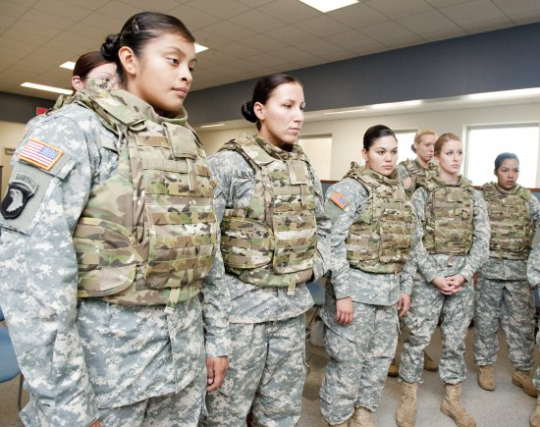
Not at all coincidentally, here’s some modern body armor worn by female soldiers:
Incidentally, the Scythians also had similar armor, made of scales, woven leather, or some form of lamellar.
Anyway, the movie makers could have their characters showing a bit of thigh (if it’s that important that they be sexy somehow) and maintain some sense of accuracy with thick torso armor, which at least protects the vitals, If they wanted to really get back to the idea of Amazons as terrifying warrior women who act as equals to men and fight as equals to men, and keep the Ancient Cultures motif, these ladies would be wearing stripey pants and furry hats.
Basically, I think it would be awesome to put Wonder Woman in stripey pants.
Alrighty, so I just spent an hour looking up stuff about ancient pants. You don’t have to dislike DC’s costumes just because I do, though- they’re just not very accurate to either ancient Greek culture, or to ancient Greek depictions of Amazons. And there’s no pants.
TBH now I kinda want to redesign Wonder Woman to be a Scythian Amazon. Lemme know if you want me to tag you or whatever if I end up posting a drawing of Wonder Woman in stripey pants.
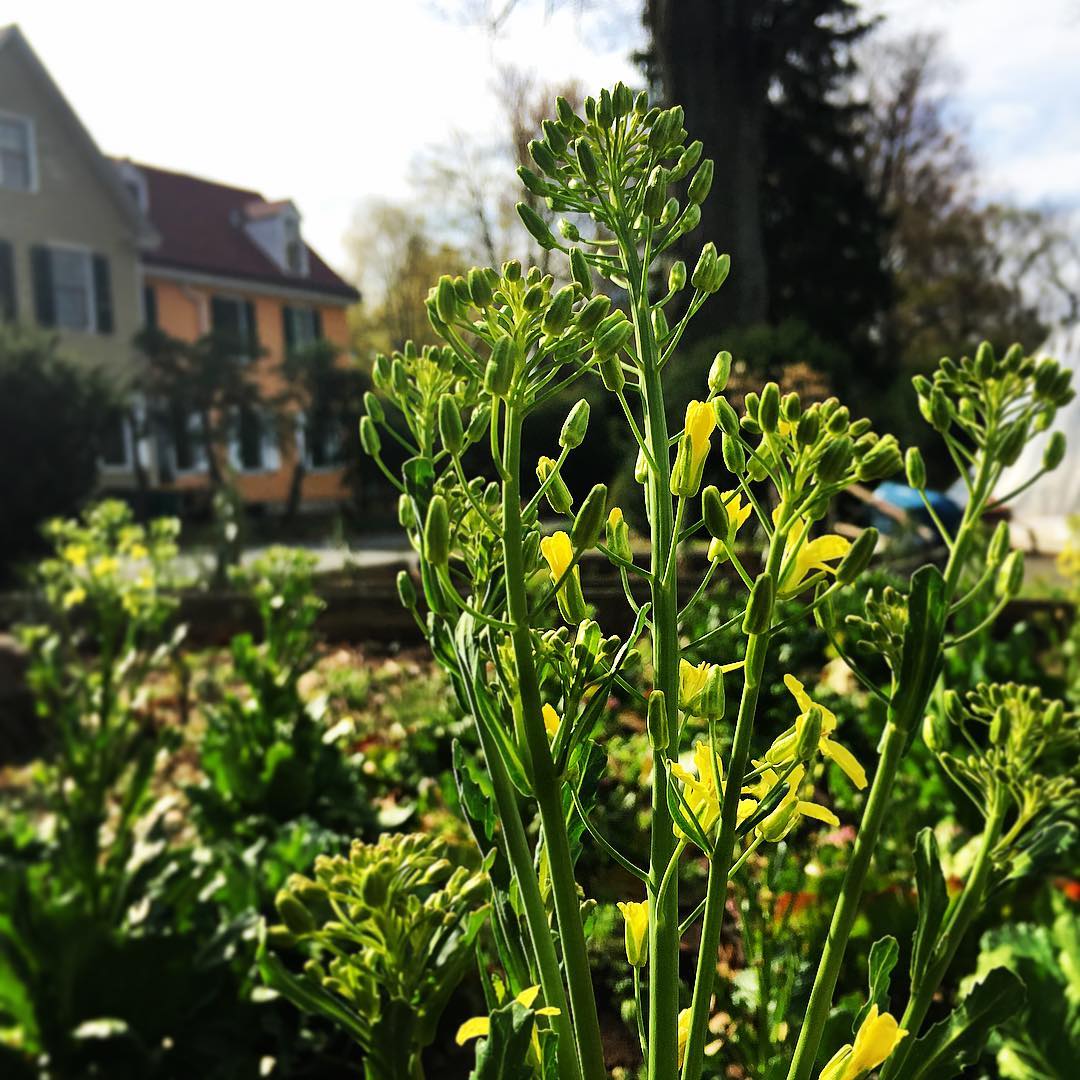
Yesterday this flowering was stressful, today it is a relief! Why? We over-wintered three varieties of Brassica oleracea (a species that includes cabbage, kale, collards, broccoli, brussels sprouts, cauliflower, etc) at Roughwood, with intentions to move two of them before they flowered, because they need about a half-mile between them to avoid unwanted cross-pollination. But spring fever is coming on early this year! So yesterday we brought our Caulet de Flandre plants (for those of you with @seedkeeping calendars, see tomorrow) to our friend Josh’s garden at the Garrett Williamson Foundation just days before their flowers are to open. And on Wednesday next week we will bring our Turnip-Rooted Cabbages to #kutztownseedfarm proabably just days before THEY will open. These Green Glaze Collards are amazing and delicious and RARE and I’m relieved that they are going to flower amongst themselves. I’m sure they’d be interesting with bulging purple stems or tall with purple leaves, but that’s not what we are going for: we are preserving our separate rare historically-important varieties. #greenglazecollards #cauletdeflandre #turniprootedcabbage #brassicaoleracea #brassica #seedsaving #seedkeeping #cruciferous #isolationdistance #roughwoodseedcollection
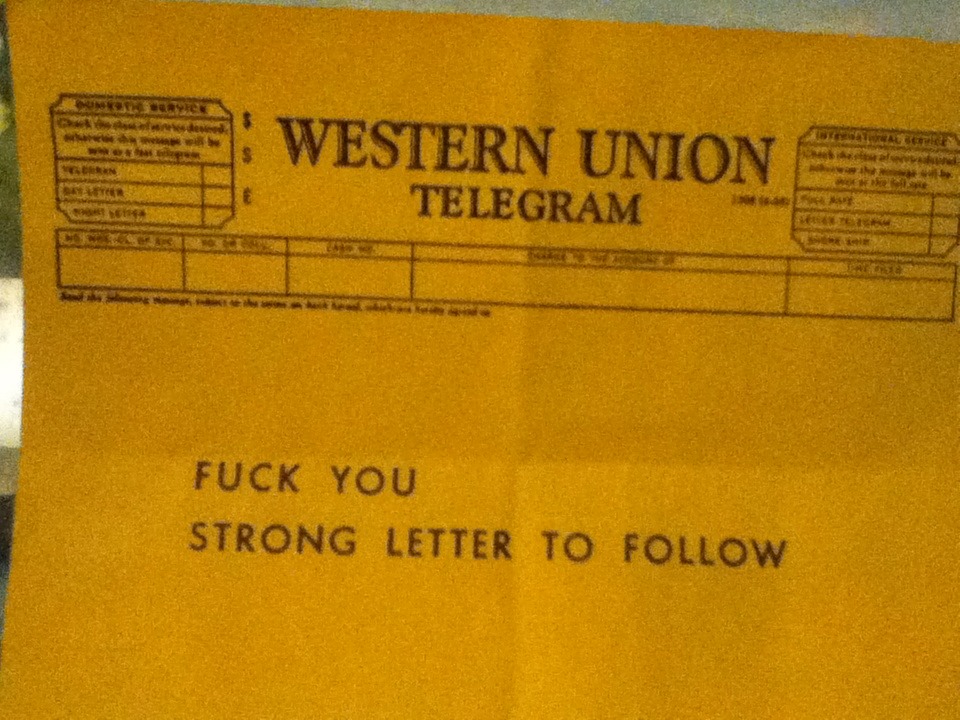
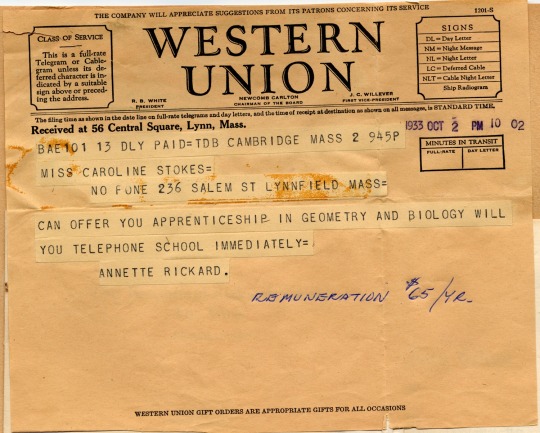
What I love most about this is that this person was SO INCENSED at the recipient that they couldn’t even wait the days/weeks it would take for the mail to go through. No, they had to say “FUCK YOU” as soon as fucking possible and, AND, let the recipient that they were not done with the fuck you, nay, this was merely the first volley in what would undoubtably be a dressing down of Biblical proportions.
i will gleefully reblog this every time i see it
Look, I hate to spoil your fun, because it’s a cute idea, but please, put some more effort into the fraudulent telegrams. Real telegrams look somewhat different:
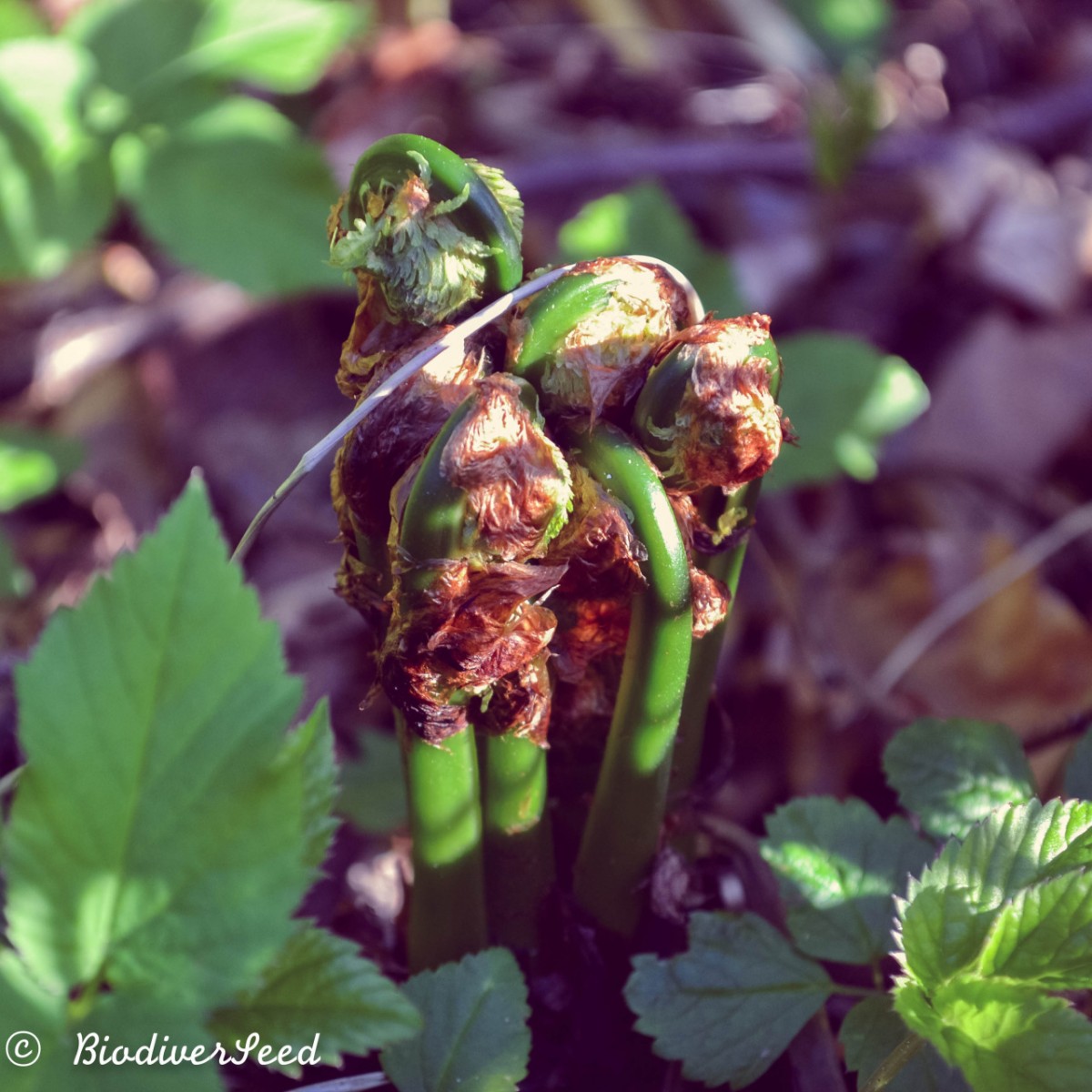
In the springtime, a special delicacy to be had is the emerging, curled frond of the fern, called a fiddlehead because of it’s resemblance to the scroll of a fiddle.
Consumption of undercooked fiddleheads has led to several outbreaks of foodbourne illness: they are difficult to clean, and therefore require a certain amount of heat before they are safe to ingest.
Despite all warnings, if properly identified and carefully-prepared, fiddleheads are a rich source of omega-3 and omega-6 fatty acids, dietary fibre, iron, and potassium.
I am not a fan of the taste of fiddleheads, and they are what I would call “marginally edible” – like tulips, they have a place in my edible landscape essentially as a last resort, or famine food.
Others regard them as a delicacy, however, and globally, their consumption has a rich ethnobotanical history. They are certainly a lovely addition to the ecology of an edible forest understory. I regularly transplant offsets of the Ostrich fern to form dense colonies under newly-planted trees.
I feel compelled to add to this post, like any other conversation about foraging: be mindful of where and what you gather.
I’m not anti-foraging, in general. Ethnobotany is an awesome field of study and there is a lot of good that comes of people getting in touch with their local ecosystems on a foraging sort of level. I’ve taken and given classes on wild edibles. My boss wrote a book on them.
But right, ok, we get people poaching fiddleheads in the forest preserves where I work every year a little past this time, sometimes by the sackful. Yeah, it counts as poaching, even when it’s plants–and there’s some serious fines if you get caught. There are plenty of common ferns growing in our forest, and a lot more uncommon ones. They all get a lot more uncommon when the poachers come through.
The big bag-full-of-greens poachers are bad news. They wipe out native plant populations. They dig up rare flowers to sell for people’s gardens. Species that are nowhere near threatened or endangered on any list suddenly disappear from an area. There are supposed to be morels, in our woods. They’re supposed to be growing there and decomposing trees and leaves and everything else, to keep the nutrient cycle going. Every once in a while, one of our staff ecologists will see a small patch and keep it secret from everybody but the other ecologists. They’re always gone by the time anybody goes back.
If you care enough about native ecosystems and sustainability and so on to be really interested in ethnobotany and foraging, chances are you already know the big-bag-of-greens poachers are terrible. You already know it doesn’t make a big difference to local ecology, if one person takes a handful of fiddleheads for themselves out of a healthy ecosystem with a thriving fern population. That’s the kind of foraging humans have been doing for thousands of years. It’s sustainable. That would be fine. But you can’t have that, in a public nature preserve. Not even the small handful.
Think of it this way: nature preserves belong to whatever organization, usually governmental, that administers them, and in a roundabout way therefore belong collectively to the taxpayers as a whole. Which means that every single taxpayer, every kid who wants to go tromping through the woods and trampling over the trillium to get to the garlic mustard we’d honestly love to get rid of, and every high-end chef who just wants a couple of handfuls of wild ramps for a one-night special, and every single person who heard that wild ginseng is twice as potent as the cultivated stuff, and yeah, everybody who wants to try fiddlehead ferns–they all have the same rights to go out there and start grabbing stuff. Every single one of them.
In an ideal world, nobody would ever think of touching the endangered species and we’d be giving garlic mustard away by the sackful until we got rid of it all (it makes a really tasty pesto), but unfortunately we don’t live in one of those. The only way to make it work, and legal, and sustainable, and all of those other complicated-intertwined concepts that come up when the government is trying to preserve natural space, is to just say no. Don’t do it. Period.
So yeah. Go find native edibles! Plant native edibles! Enjoy them, forage for them, harvest them, go wild, just be mindful of where you’re grabbing from. Tragedy of the commons. Trust me, I can assure you, the beleaguered staff of whatever public preserve might be near you already have enough on their plate battling buckthorn and loosestrife and deer overpopulation and brand new highway development. Don’t do the thing.
This is very important info–reblogging for it.
As it happens, I was thinking about this the other day–I grow goldenseal in my garden (for no other reason than I think it’s neat) and it’s just coming up in the garden now. It’s one of the plants locally that’s massively under threat in the wild because people harvest goldenseal from the wild for use in alternative medicine. (And if it was just somebody going out and harvesting a couple roots for their own use, that would be one thing, but it’s usually people yanking it up in quantity to sell.)
There is nothing inherently wrong with foraging, but the line between foraging and poaching is one you always want to stay on the correct side of.
(As always, of course, the people who worry about this are probably not the ones who need to–if you’re panicking over picking a daisy, that’s one thing.* if you’re one of those bastards who shovel up Venus fly-traps by the hundreds to sell for a buck at the flea market, that’s quite another, and I hope that there is a suitably ironic punishment awaiting you in the afterlife.)
*But seriously, unless you know it’s a common plant, err on the side of caution. Stuff like lady’s slipper and trillium and jack-in-the-pulpit don’t just grow another flower.