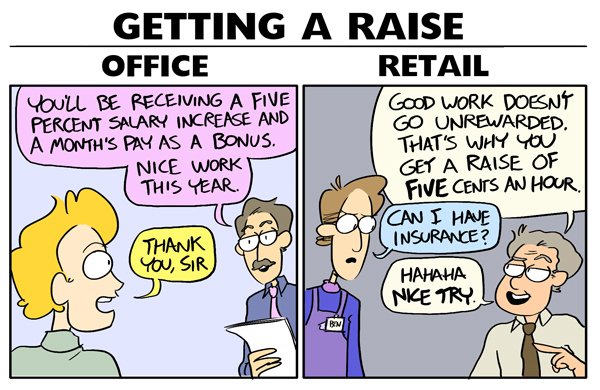
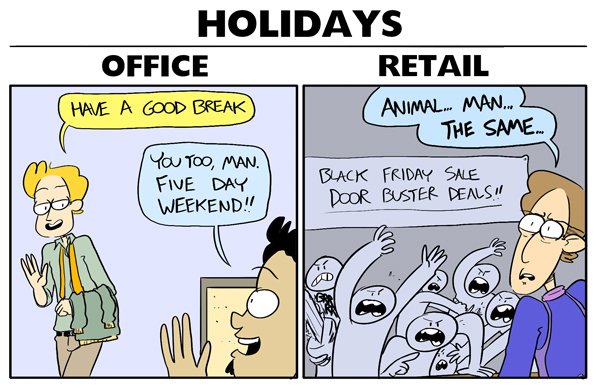
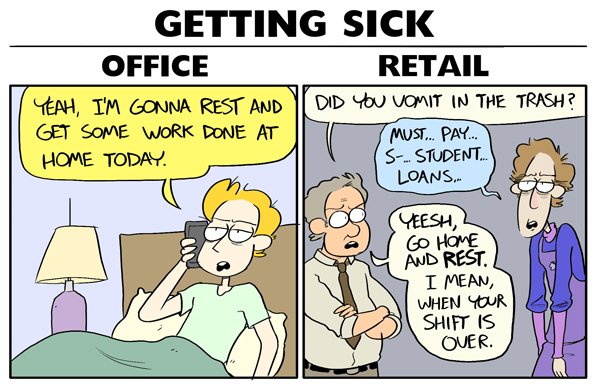
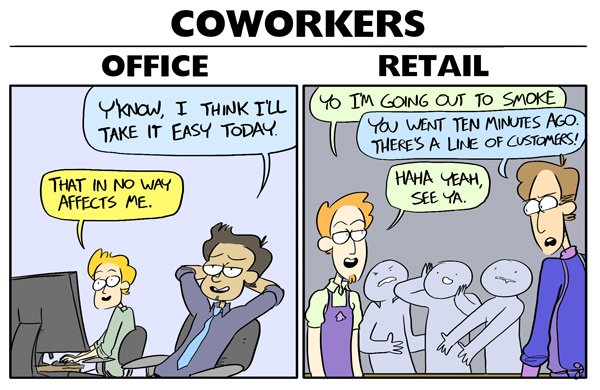

Reasons Why Retail Jobs are Harder than Office Jobs.
And yet people don’t think retail workers should get a living wage. I’ve literally gotten a five cent raise myself.
8 cent raise right here
Reasons Why Retail Jobs are Harder than Office Jobs.
And yet people don’t think retail workers should get a living wage. I’ve literally gotten a five cent raise myself.
8 cent raise right here

God Save the Queen
This is hilarious. ngl
You could also make a French flag


Nichelle Nichols “Lt. Uhura” flies aboard SOFIA
Nichelle Nichols recently flew on board NASA’s Stratospheric Observatory for Infrared Astronomy, SOFIA, the world’s largest airborne observatory. Ms. Nichols has been collaborating with NASA for years, actively recruiting into the astronaut corps and into STEM careers. In the 1980s, she flew on SOFIA’s predecessor, the Kuiper Airborne Observatory.
During her flight, Ms. Nichols recorded this short message highlighting the important research NASA is doing to further humankind’s exploration of the solar system and beyond. Learn more by visiting: www.nasa.gov/solarsystem/
——-
“Hi, I”m Nichelle Nichols, I played Lieutenant Uhura – Chief Communications Officer aboard the Starship Enterprise on Star Trek The Original Series. Today I’m aboard SOFIA, a NASA aircraft flying into a stratosphere with an infrared telescope to observe light coming from interstellar objects. SOFIA helps astronomers learn more about the birth of stars, formations of planetary systems, black holes and more..
SOFIA reminds of the starship Enterprise – it goes ‘Where no man or woman has ever gone before’
Live long and prosper”
Nichelle Nichols

terriblerealestateagentphotos:
I’m cooking tonight. Bring me the cremation urn and some Victorian surgical implements.
For a long time, there was a… conceit, of sorts, in science fiction, of connecting simple large objects in such a way that produced inexplicable complexity. The sort of thing where the characters would put five or six pieces together, and suddenly have a walking, talking robot.
It never made the least bit of sense, either in reality or to me personally, but that latter is changing. As I’ve been playing around with this carbon microphone (here’s a new test recording from yesterday, using the improved circuit) and along the way reading about things like the early telephone system and early radio and most of all the telegraph – I really start to see how they get there.
Particularly early radio, and even more particularly the telegraph.
The telegraph, I mean, damn. They ran one wire. Not a pair of wires: one. They relied on local grounding at each station; the ‘return’ for the power supply was the planet.
So look at this from a not-really-that-naive point of view, right? You’re a farmer out in the middle of Saskatchewan or something, right? It’s weeks to anywhere. You go into town for your mail every couple of weeks, the nearest neighbour is a mile or two or three away, a big gathering in town is monthly market day. You’re not stupid; you deal with complex machinery pretty regularly as a farmer. You know how this works; you know clocks, you know how complex machines have to be to do even simple things well, you know how they work and now to fix them and how to adapt them to new tasks.
Now take this metal rope, attach it to a bit of wound-up metal thread and a lever and a spring, and suddenly you can talk to Vancouver. Sure, you need to learn a code, but that’s easy, and suddenly there’s impossible spooky action at a distance – a really big distance.
Then there’s radio. Even crazier. Take another metal rope, and another bit of wound-up metal thread, and a tiny bit of inexpensive crystal, and this thing you put in your ear that you ordered by post (which is not more than a magnet and some more metal thread and a piece of paper) and suddenly you have news from Toronto in your house.
To the observer at the time, it is intense complexity from small numbers of simple parts. Sure, most of the complexity comes from the humans at the far end of each connection, but it’d take a good bit of sorting out to get that really parsed, and in the meantime, the reaction is more along the lines of:
What magical fuckery is this?!
Suddenly the whole “small numbers of simple objects producing combinations of intense complexity” makes a lot more sense. They’d seen it multiple times in their lives, so… let’s make a robot with eight vacuum tubes, a motor, and a bunch of metal tubes? SURE, WHO EVEN KNOWS – THAT OTHER SHIT WORKED, WHY NOT THIS? How is an empty metal tube supposed to do anything? I dunno, I didn’t expect this metal rope to do anything either, but now it’s 8pm and dark since 4pm and I’m snowed in on the cold cold plains in January, and before going to bed I’m listening to a jazz band playing right now in the Savoy Hotel in New York City.
Impossible madness, from small numbers of simple parts.
Really, if anything, it’s surprising those decades weren’t even goofier.
Mirrored from Crime and the Blog of Evil. Come check out our music at:
Bandcamp (full album streaming) | Videos | iTunes | Amazon | CD Baby

Nissrine, a Moroccan girl, reads an application for a Dutch citizenship course. An alternative version of Johannes Vermeer’s painting Girl Reading a Letter at an Open Window. Photo by Jan Banning.
“Xenophobia, especially Islamophobia, is rising in many European countries…I feel it is necessary to mobilize against such intolerance. My ‘National Identities’ series gives immigrants the main role, using them as models in my photographic variations on classic paintings.”
Les Moonves: Trump’s run is ‘damn good for CBS’
“It may not be good for America, but it’s damn good for CBS,” Moonves said at the Morgan Stanley Technology, Media & Telecom Conference in San Francisco, according to The Hollywood Reporter — perfectly distilling what media critics have long suspected was motivating the round-the-clock coverage of Trump’s presidential bid.
CBS and corporate media have been giving Donald Trump billions of dollars worth of free advertisement, not because his every utterance is newsworthy or in the public interest, but solely for their bottom line. Greed. If you ever needed proof that huge swaths of our corporately controlled media doesn’t care about actually informing the public, then here it is.
At best, mainstream media is biased infotainment and our 4th estate is swiftly becoming a bigger joke than it already is.
A towel, it says, is about the most massively useful thing an interstellar hitchhiker can have. Partly it has great practical value. You can wrap it around you for warmth as you bound across the cold moons of Jaglan Beta; you can lie on it on the brilliant marble-sanded beaches of Santraginus V, inhaling the heady sea vapours; you can sleep under it beneath the stars which shine so redly on the desert world of Kakrafoon; use it to sail a miniraft down the slow heavy River Moth; wet it for use in hand-to-hand-combat; wrap it round your head to ward off noxious fumes or avoid the gaze of the Ravenous Bugblatter Beast of Traal (such a mind-bogglingly stupid animal, it assumes that if you can’t see it, it can’t see you — daft as a brush, but very very ravenous); you can wave your towel in emergencies as a distress signal, and of course dry yourself off with it if it still seems to be clean enough.
More importantly, a towel has immense psychological value. For some reason, if a strag (strag: non-hitch hiker) discovers that a hitchhiker has his towel with him, he will automatically assume that he is also in possession of a toothbrush, face flannel, soap, tin of biscuits, flask, compass, map, ball of string, gnat spray, wet weather gear, space suit etc., etc. Furthermore, the strag will then happily lend the hitch hiker any of these or a dozen other items that the hitch hiker might accidentally have “lost.” What the strag will think is that any man who can hitch the length and breadth of the galaxy, rough it, slum it, struggle against terrible odds, win through, and still knows where his towel is, is clearly a man to be reckoned with.
Hence a phrase that has passed into hitchhiking slang, as in “Hey, you sass that hoopy Ford Prefect? There’s a frood who really knows where his towel is.”