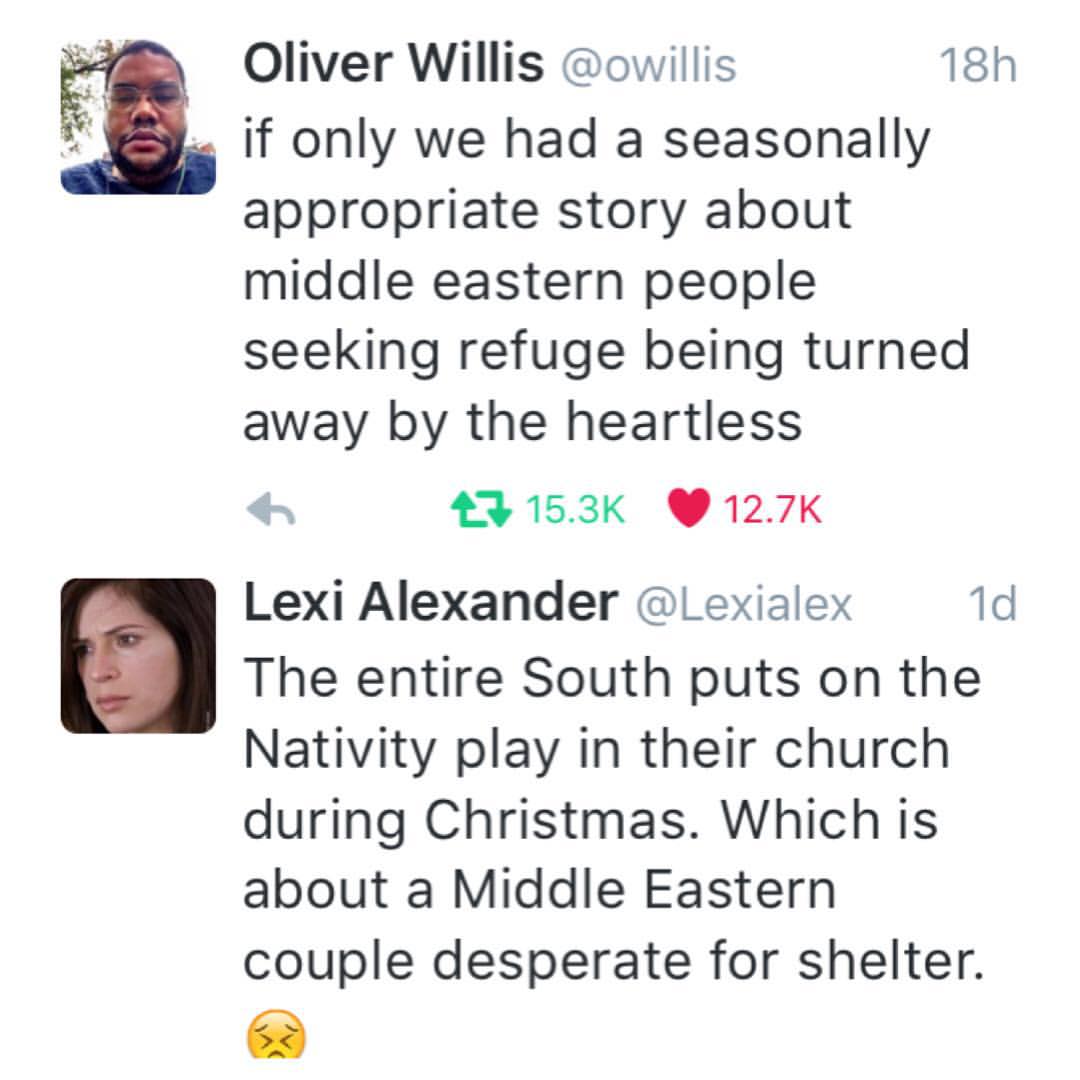
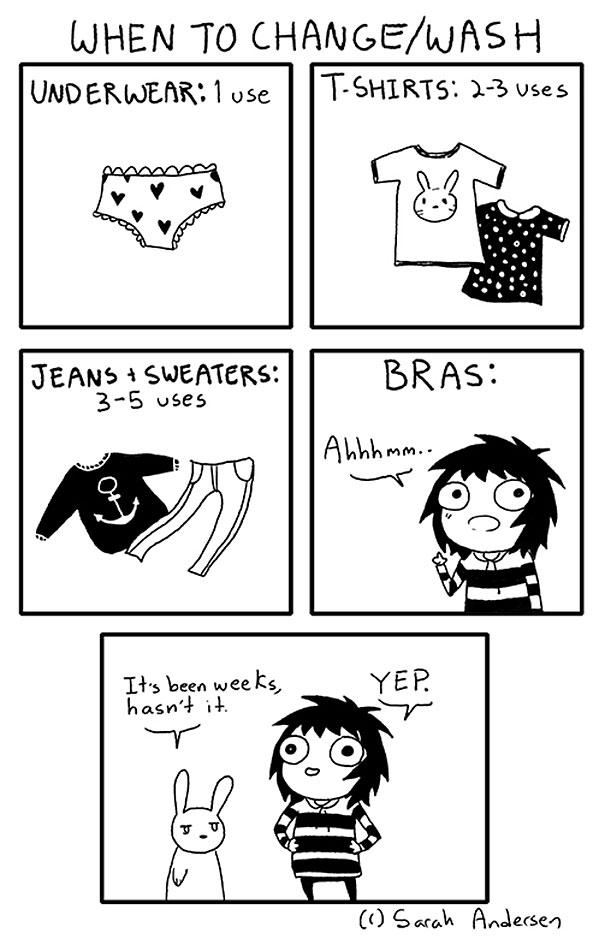
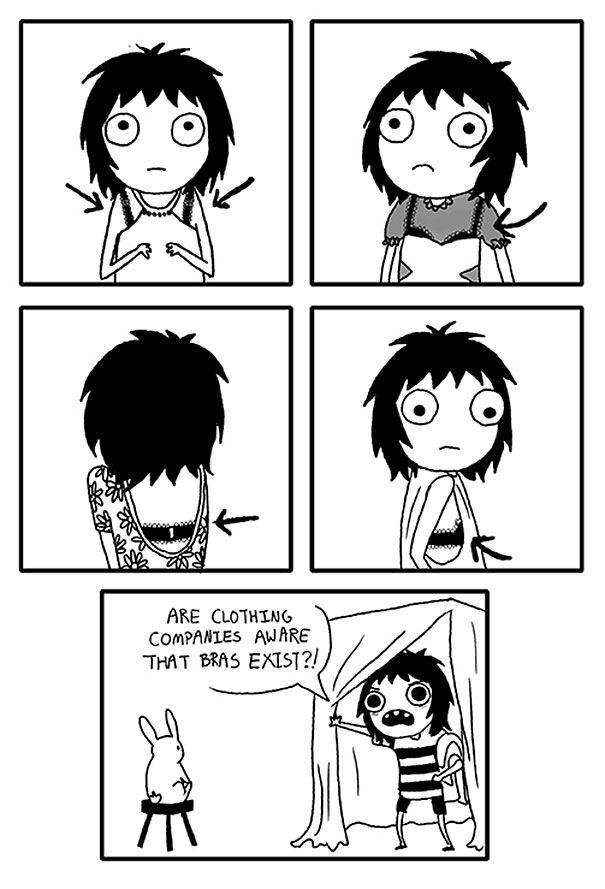
“women don’t know how much rejection hurts” i wasn’t allowed to play with legos or touch a football or look at sports. i wasn’t allowed to eat more. i wasn’t allowed to talk loudly, to laugh too much, to inject myself into male conversations. i wasn’t allowed to be good at science. i was told “oh sweetheart, have another college in mind, STEM fields are hard.” i got turned down from jobs in favor of boys where were less qualified. one boss told me he was hesitant to hire me because my last name is hispanic and i’m pretty and he didn’t want the “controversy.” i couldn’t take up space on the train. i would be talked over in public places. i couldn’t eat steak or drink beer, they were “boy” things. video games were off limits, i wasn’t allowed to ask if i could see more characters like myself in them. super heroes were all men, women were just love interests. i wanted shirts with wonderwoman, with black widow, with harley quinn, i found next to nothing. i wanted pockets and colors other than pink and clothes designed for warmth, not sexy, i got nothing. women change their name to be published nationally. i wasn’t allowed to be emotional, i wasn’t good at driving, i wasn’t in charge of my own body. i wasn’t allowed to show off my body, i wasn’t allowed to dress modestly. i had to be pretty, whatever it took, but my eating was constantly made fun of. “she’s, like, anorexic” was a punchline, not a disorder. “she’s fat” was a death sentence.
boys said no because: i wasn’t pretty i wasn’t small i was too loud i spent too much energy on being funny on because i wouldn’t shut up what a feminazi i wasn’t smart i was too smart for my own good i was always reading i was always busy i was too needy i was too independent i was not who you took home i was too much of a house mom i was perfect and it was scary.
women don’t know. women don’t know. never sat in a room and wrote angsty poetry about this shit. somehow both overemotional and not capable of knowing how much rejection stings. which one is it. which one is it. i’ll give you a hint: we’ve been rejected since the first time our parents said, “no, not the blue blanket, it’s for little boys to play with.” we are used to having “no” slammed in our faces. we got used to it. maybe the reason it seems so unnatural to hear “no” is because for your entire life, you heard “yes.”
It can go all the way down to the county level, which is kinda crazy.
31,493 people have my surname.
And I will fight them all*
so im not at all surprised that Yi is the 118th most common last name and there are more than 4 million people that share it…. tbh its really nice and i feel very connected right now
Only 1,245 have my surname. That’s still a lot more than I thought there would be…
ALMOST ALL OF US ARE IN ECUADOR
IM ONE OF 157 PEOPLE STATESIDE WITH MY SURNAME
WHY IS THERE NO ECUADORIAN FLAG EMOJI
3,560 with my mom’s surname, the majority of whom are in England, no surprise there. 887,025 with my surname, which is also not surprising at all. And 1,363 with my paternal grandma’s maiden name, 37 of which are in Canada, most of whom are probably related to me.
As confirmed, my married name is a strong Ukrainian name.
There are 8 people who have my same last name.
My maiden name is, unsurprisingly, most highly concentrated in North Carolina. And it lists one incidence of it in Canada. I wonder if that’s me or someone else…
181 people globally with my maiden name. Wow. And the only people registered outside of the UK are my family. Amazing.
Global incidence of my married name?
18.
What.
Original surname: 500+ in Brazi, 250+ in Germany. 36 in India, 22 in England (all my family), 2 in America and 1 in Canada (who I am related to).
First half of current surname: 2000+ in England.
My now-surname: None. I guess this just confirms that I really am the only person in the world with this surname. Which is kinda surreal.
10,191 people with my surname.
9,823 of them are in the US.
The rest are in England and/or parts of the British Empire.
I mean….it’s Scarbrough (derived from Scarborough), so….
53 people with half of my surname. I didn’t check the other half.
US and Canada and Sweden have the highest concentration of my surname.
Not exactly stunning surprising, as I have a patronymic last name. 3196th most common surname on the planet. Approx 170K people share it with me.
A bit over 15,000 with my surname, which is way more than I thought it would be. Mostly in the U.S., with a significant number in Northern Ireland.
7 million +. 60th most common surname.
Only 50 people have my married last name omg
wow, I thought I was obscure with 316 :D
Thanks to our hybridisation of our last-names on marriage, the global incidence recorded is…. none.
Sri Lanka, which reports a near 100% vaccine coverage rate, is one of four countries scheduled to take on the full cost of its immunisation program in 2016, departing from Gavi support. Dr Ananda Amarasinghe of the Health Ministry’s Epidemiology Unit reveals the secrets behind the country’s immunisation success story, and how they’ll be keeping it up.
1. Make families aware of vaccines
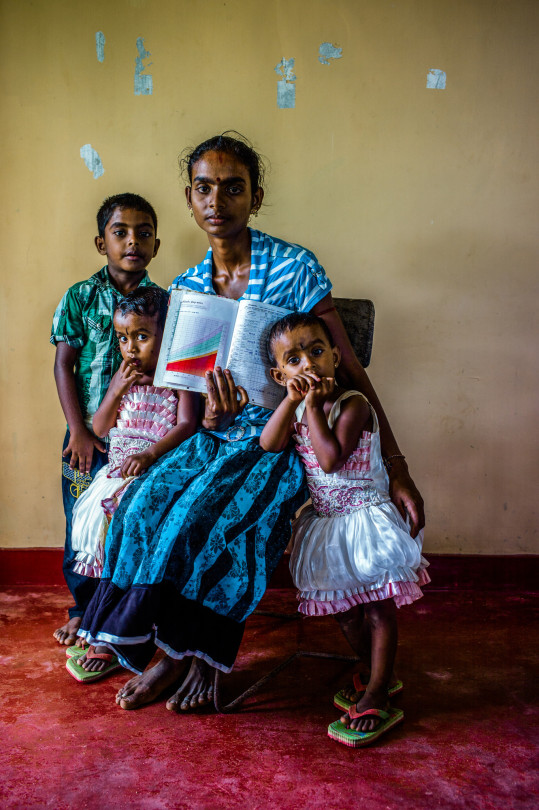
A mother holds up her children’s immunisation cards. Photo: Gavi/Mithra Weerakone.
Remarkably mothers who lost everything either as a result of civil conflict in the north-east or the 2005 tsunami which devastated the south, still possessed their children’s immunisation cards. “It shows their recognition for immunisation as a guarantee of a better future for their children,” says Dr Ananda.
It also demonstrates the importance of Sri Lanka’s high literacy rates with mothers and fathers highly aware of the benefits of preventive care. For example, hospitals are preferred to home deliveries. When the 5-in-1 vaccine roll-out was suspended in 2008, following reports of adverse reaction to the vaccine, the Health Ministry was rapidly able to reassure families about the vaccine’s safety. “Mothers temporarily questioned pentavalent but they never lost their faith in immunisation,” says Dr Ananda.
2. Connect with communities
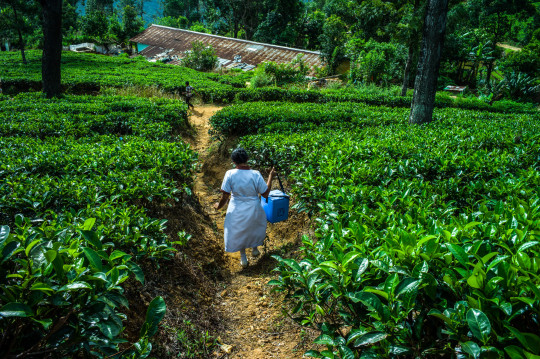
Health worker visits workers inside the tea plantations of central Sri Lanka. Photo: Gavi / 2013 / Sanjit Das.
Sri Lanka’s stratospheric immunisation coverage rate owes much to a nationwide network of 4,000 community-based healthcare workers. There is approximately one health worker for every 5,000 Sri Lankans. Regular door-to-door visits, usually by bike or scooter, mean each is always up to date on their patients’ state of health.
The health workers hold regular outreach clinics raising awareness of antenatal care, immunisation and maternal and child health – and also registering every newborn child. If a mother or father fails to bring their child to a vaccination session, the health worker visits their home and, in some cases, personally accompanies the child to her clinic for immunisation.
3. Build a top to bottom health system
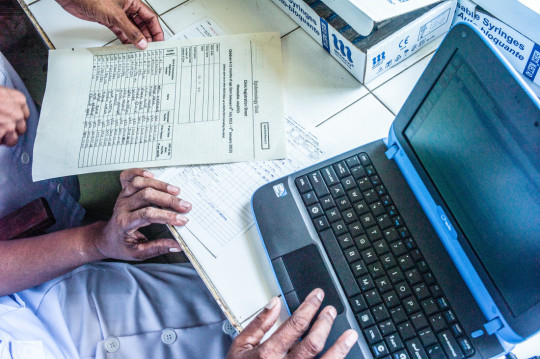
Technology helps keep all levels of the health system informed. Photo: Gavi/Mithra Weerakone.
Sri Lanka’s public health system, which dates back to the 1920s and the time of British rule, provides a mix of curative and preventive services at national, district and divisional levels. “Our colonial masters established a good foundation,” says Dr Ananda. It ensures a steady flow of information from grassroots communities to the Health Ministry for monitoring and evaluation. Regular updates on local immunisation coverage rates are delivered to Colombo and are often available online thanks to a new online registration system.
The system works both ways. When launching the five-in-one vaccine in 2008, the Ministry enforced a new open vial policy by meeting with 26 district immunisation managers, who, in turn, informed the 330 divisional offices. “We told them if some doses remain, don’t discard them,” says Dr Ananda. Instead of 10% wastage, the Health Ministry registered less than 1% – enough vials to provide for one month of vaccinations.
4. Secure political support
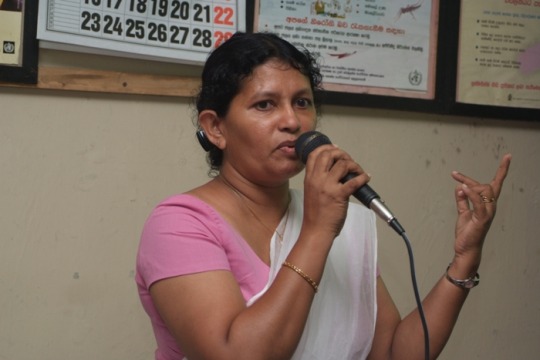
Doctor Nimalka Pannila Hetti, regional epidemiologist, speaks about raising political awareness for vaccines. Photo: Gavi/Mithra Weerakone.
Even during the civil conflict, temporary ceasefires allowed hospitals and clinics to deliver immunisation and other basic health services. Successive Sri Lankan administrations have also prioritised free health and education.
In 2014, the Government introduced a national immunisation policy guaranteeing every citizen the right to vaccination. There is a separate line in the national budget for immunisation ensuring continuity in the delivery of vaccines and virtually no stock-outs. “It is the responsibility of our people to get vaccinated so the Government guarantees the availability of vaccines,” says Dr Ananda.
5. Invest in long term training
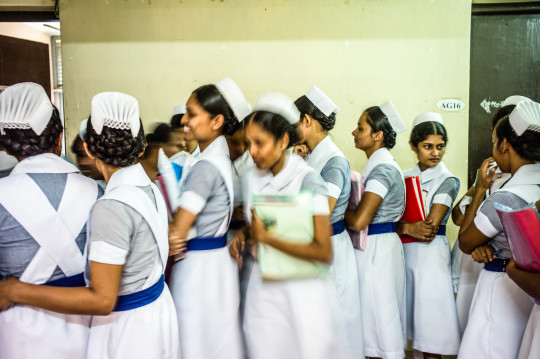
Sri Lankan nurses in training. Photo: Gavi/Mithra Weerakone.
To ensure the long-term sustainability of its immunisation programme, the Health Ministry invests in training future generations of public health inspectors and health workers at six regional training centres and one national centre. “No matter how many clinics you build, you can’t provide services without trained resources,” says Dr Ananda, “We want our successors to do even better than us.” Since the end of the civil conflict in 2009, the training centre at Vavuniya in the north of Sri Lanka has trained over 600 health workers to help rebuild the health system in the former conflict zone.
Under the colonial administrative system, all government officers learnt their trade in rural areas before moving to the major cities. Today, Sri Lanka’s public health staff must also gain extensive experience working at divisional then district levels before moving to the Ministry in Colombo. “Before we come to the centre, we need to know the reality on the periphery,” says Dr Ananda.
The Health Ministry knows what to do to make vaccines work for their citizens – their challenge now is maintain success by keeping prices fair for future vaccine purchases. “That is where Gavi can help,” says Dr Ananda, “We wish to rely on ourselves – we have the money and can procure the vaccine. But with our small population, we are not in a position to bargain with the manufacturers. That is what we now ask of international organisations: can you help as a negotiator?”
So it seems our buyer’s solicitors are set on doing every action sequentially. So rather than, say, when they were waiting for the survey to occur, getting the ‘Land Search’ done, and perhaps going through the inventory, they did each thing one after another waiting for the survey, then waiting for the land search, then doing the queries on the land search, then doing the inventory.
Now it turns out that rather than getting the contract prepared whilst waiting for the mortgage company to come back with the completed agreement, they’re waiting for for the mortgage company to come back.
This appears to be a very impressive way to make everything take as long as possible, which is driving us both absolutely spare. We’re now slipping another week, although this doesn’t yet impact the actual date we fly, but it means everything will be being shipped over the christmas period, and whereas we were expecting stuff to arrive just after we got there, we’re now not going to see our stuff until January.
On the plus side, Rebecca is back and looking tres shiny.
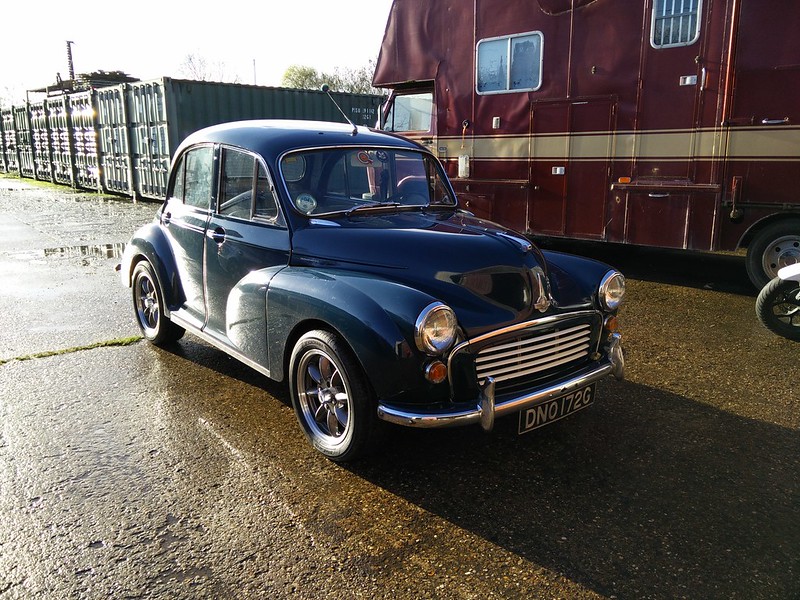
Although there was a rather anxious period as I flew down the motorway; everything started off fine, but as we trundled the temperature gauge crept mercilessly towards the red, eventually sitting at the border between high and TOO HOT!… Fortunately, shortly after it started its upward trend I spotted a set of services, then swung rapidly into their carpark (or ‘parking lot’).
As I pulled in the gauge continued its upward trajectory for a second, just sneaking into the red before plummeting downwards. A quick check demonstrated that she’d not vented all the coolant, so my suspicious mind says that the thermostat, not used to actually having to do anything, stuck. Then faced with the increasing hotness of the engine finally popped open. As to whether it’s now stuck open, I don’t know (but don’t think so, given that the needle resolutely sat at ‘normal’ for the rest of the journey).
Other than that, the journey was painless, and I was reminded (before I got on the motorway) of just how much fun a minor is to drive and why I’ve been so insanely persistent in keeping my poor beleaguered car on the road. I was also reminded that whilst the A series engine is a great engine, I really love EVs. After a few hours of the trundle down the motorway, the rasp of the A series does become fairly tedious.
Still, I love my little blue poached egg.
Task to achieve before we move – installing the headlining. If anyone in Bristol’s done this before, and would like to give me a hand, I’d appreciate it. I’ve just got some new wire to thread through the new headlining, and I’ve got instructions, and I’ve got a new headlining (and in fact, the old ratty one). Apparently it’s a task for which we should ‘allow a day’. So that’ll be fun.
Of course, at the moment, it does feel like ‘if we move’, with the solicitors being so frustrating.
Anyhow… (Deep breaths).
In good news, I have a job interview… so that’s nice :) Dunno when yet, what with me being in the wrong country and all…