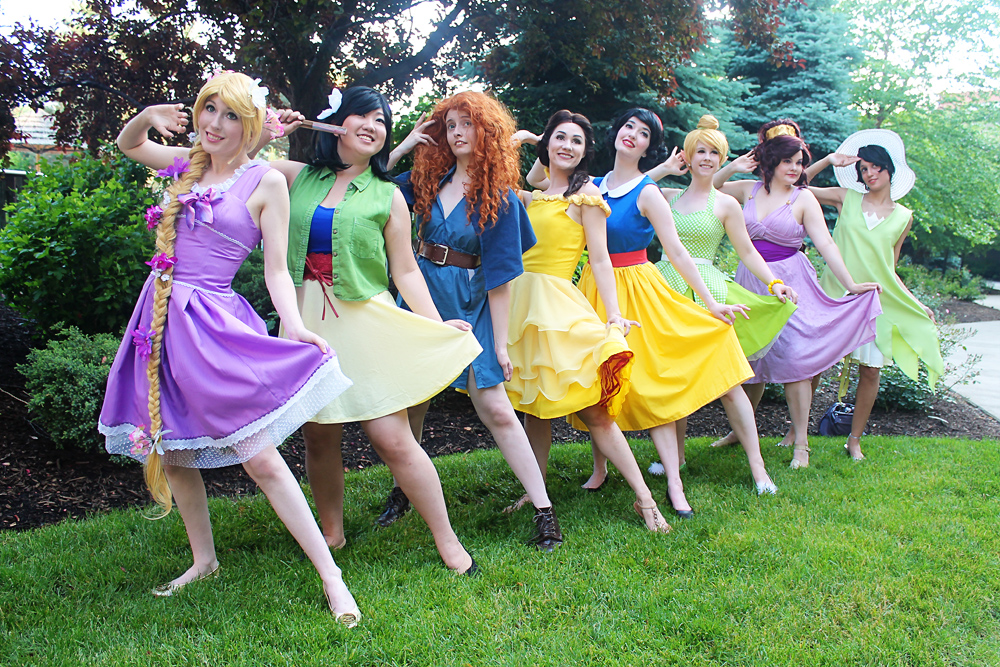
I’m actually black! But thank you for trying to make an ignorant statement about things you don’t know!
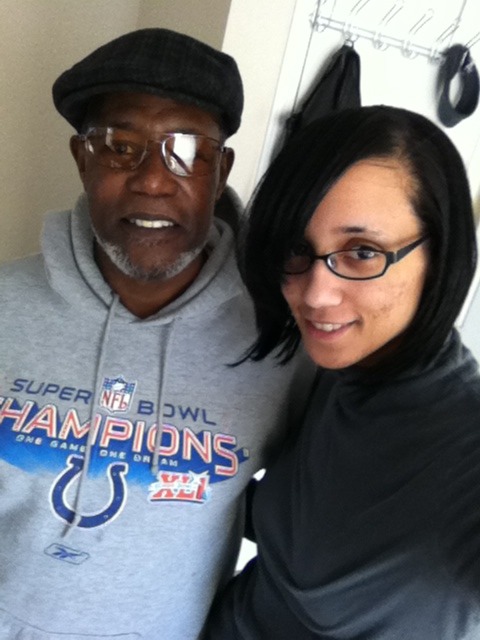
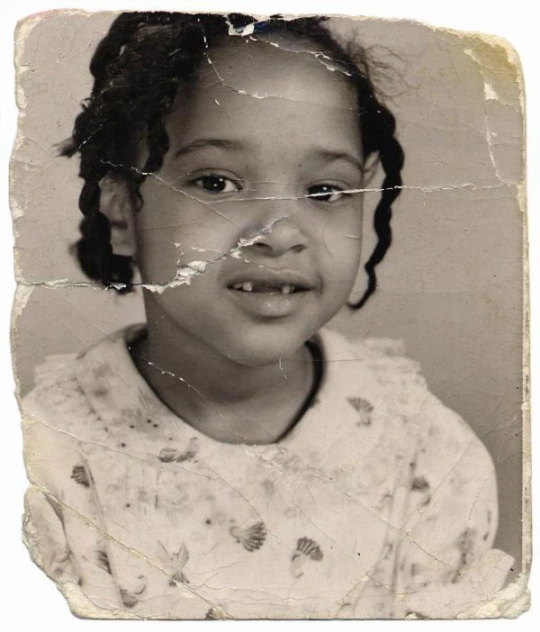
(I know it’s hard for you to believe, so here’s a picture of me with my father:
Regardless of skin tone, people can also cosplay whoever they want to! Regardless of size, race, gender or anything. If someone who was white wanted to cosplay Tiana because Tiana is their favorite princess, then my god let them. People can’t help what skin tone they are born with. As long as they are respectful then let them have fun.
But sorry my skin tone doesn’t fit your standards.
So tonight I joined my parents, and the neighbours, at the local pub quiz. We won, and won the bonus round, much to the annoyance of the other teams. Apparently my parents and their friends win every other week. Nerds. So to prank them the landlord had a special “Super Hard Pub Question” for us for double or nothing on our prize (vouchers for a gallon of beer) to let the rest of the pub feel better because we were “guaranteed to lose” since there was “no way we could know the answer.” I got picked to answer it because I’m the youngest and have less General Knowledge.
The question?
“What is the word for beer in Ancient Egyptian?”
Pub: *loud raucous laughter and cheering*
Landlord: *looks smug*
Me: Do you want that in English or in the original Hieroglyphs?
Landlord: The hieroglyphs of course!
Pub: *more laughter*
Me: *scribbles quickly in the 10 seconds I had to answer*
Landlord: Fuck. Me.
Pub: *utter silence broken only by someone at the back exclaiming WTF*
Landlord: How did you even know that?
Me: You picked the one person here who can read them?
Landlord: Oh shit it’s you isn’t it?
Dad yelling from the back: SURPRISEEEEEEEEEEEEEEEEEEEEEEEEEE
It’s safe to say we’re simultaneously fucking legends/not very popular at the local right now.
My grandmother got married in 1962, to a young man in the military. For a wedding present, their parents bought them a house in a nice suburb. White picket fence, whole 9 yards. Not long after they moved in, the next door neighbor planted a mullberry tree on the side of his property, near my grandparent’s driveway. Nothing seemed amiss, but if you know Mullberry Trees, you know that sh*t is about to get real.
About 15 years later, the mullberry tree was OBNOXIOUS. The birds would come and eat the berries, and any car parked in the driveway would get sh*t on, and it would stain the cars and ruin paint jobs. My grandmother, upon realizing the culprit, baked a nice apple pie, walked next door, and asked the neighbor if he’d mind trimming back the branches of the tree that hung over her driveway. He told her not to worry, he’d get to it soon. Three days later, my grandmother opened her door to find a half-eaten pie in the plate, crawling with ants, and a note that said “I changed my mind.”
My grandmother threw out the pie, cursing up a storm, and swearing up and down she’d get him to trim that tree or get him back. City ordinance said she could not trim the tree, as the roots were on his property, so the whole tree was his property.
As the years went by, my grandmother repeatedly asked him, ever so nicely, to trim it back. His responses were always along the lines of “No” and “F*ck off.” Finally, in the mid-90s, my grandmother retired, and received a large bonus from her employer for her 35 years of work. She took the money, and bought the empty lot on the other side of the neighbor, then went to a nursery and bought 16 mullberry trees, planting them along her property line, on both sides of his property. About 3 years ago, he became angry at the damage they were doing to his cars, and cut them all back without permission. My grandmother took him to court, and he was forced to reimburse her for the trees at a markup because they’d had 10 years to grow.
…. That is hardcore on a level I hardly knew existed.
So it’s Women’s History Month, and you’d like to read some female authors. “But where do I start?” You cry. Your high school reading list was a long line of white dudes and your college syllabi weren’t all that different, and you can only reread Pride and Prejudice so many times. It’s okay: we’ve got you covered. As a starter pack, here’s a few famous books by male authors, paired with a book by a female author you could read instead.
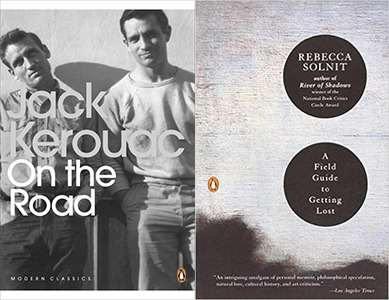
Kerouac’s famous stream-of-consciousness ode to the beat generation is one of the classic travel narratives of American literature. Solnit also contemplates travel, but from a very different perspective. Her book addresses the issues of wandering, being lost, and the uses of the unknown. Less a work of theory than a conversation with a friend, Solnit draws to the heart of what compels us to wander – “a series of peregrinations, leading the reader to unexpected vistas.” (New Yorker)
Ernest Hemingway’s first novel is about the romance between an expatriate ambulance driver and an English nurse, thinly based on his own experience during World War I. Nightwood, published in 1936, is also a modernist novel focusing on Robin Vote and the American Nora Flood, two women seeking inner peace in their relationship with each other. Djuna Barnes dwells on both the glory and isolation that come with being an outsider, and her novel is also based partly on Barnes’ own life.
Franzen’s most recent novel focuses on the journey of young woman Pip (real name Purity) and her journey to figure out her identity. Rachel Cusk’s novel, told in ten conversations, draws a spare portrait of a novelist teaching creative writing in Athens, seeking to come to terms with a tragedy in her past. Her elegant prose and highly intelligent writing create a compelling portrait of how we hide ourselves from others.
Like Cormac McCarthy’s dark, hyper-violent Western, The Outlander takes place in the early 19th century in southern Alberta. About a woman who flees into the wilderness after murdering her husband, Adamson also dwells on the hardships and brutality of the American West, but from the point of view of a female protagonist trying to escape her vengeful pursuers, retreating ever deeper into the wilderness of both the mountains and herself.
Updike is well known for writing portraits of the lives of the small town middle class. My Name is Lucy Barton is a book about the relationship between an estranged mother and daughter and the complicated love between them. Her style is undramatic and never sentimental, focusing on that which is often unspoken and only implied to create a subtle portrait of two small town women.
Frequently both called authors of “creative nonfiction”, Norman Mailer’s book follows a decorated war-hero as he descends into murderous insanity, while Joan Didion writes about an unfulfilled New York actress telling her story from a psychiatric institute after a mental breakdown. Joan Didion dwells compellingly on themes of alienation and the breakdown of the elite, and the disintegration of American culture and morals.
Anne Sexton’s deeply personal, confessional poetry can be compared with Bukowski’s writing on his relationships with women, alcohol, and writing. Anne Sexton’s poetry was frequently daring, dwelling on taboo topics such as abortion, menstruation, adultery, and drug addiction in a dramatic, sometimes rough voice.
In the 30s, John Steinbeck addressed economic injustice in his story of a family of Dust Bowl migrants struggling to make their way. Carola Dibbel writes a modern day story grappling with modern inequality, set in a near future plagued by disease and disparity, centering around a woman who finds herself at the mercy of dubious experimentation just to survive.
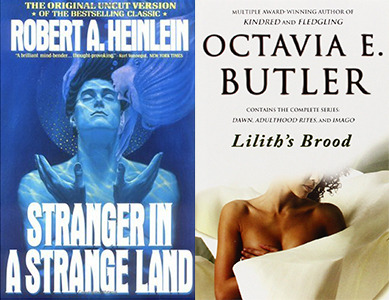
Instead of picking up Robert Heinlein’s science fiction story about a strange man from Mars who teaches Earthlings his customs, try Octavia Butler’s Xenogenesis Trilogy (published in one volume as Lilith’s Brood) about Lilith Iyapo and the Oankali, an alien race seeking to save the Earth by merging with mankind, and the struggles of humankind of maintain their own culture and identity while mercing with another species. Lilith’s Brood exhibits all of Butler’s deep understanding of human strengths and flaws.
An epic fantasy that, like the A Song of Ice and Fire series, features complex and treacherous politics and deeply flawed characters, Robin Hobb’s series tells the story of a prince’s bastard son, trained as an assassin, who finds himself caught up – and overwhelmed by – the intrigues of the powerful people around him – all while the strange menace of the Red Ship Raiders continues to threaten the Six Duchies.
I like Bernie but If Hillary wins the primary I’ll vote Hillary. I love y’all but if you let Christie or Trump become president because you wanted to throw a tantrum over Hillary winning primaries I will personally punch every other registered voter in the face. I had to suffer through eight years of a republican president I didn’t elect and I won’t do it again.
I’ll have at least four years to work my way through a punching list don’t think I won’t try it.
But Obama isn’t republican..unless you’re talking about a different president?
yes dear child, I was alive during the years 2000-2008, when President George W. Bush was president-elect. I don’t say this to be rude because you’re 16, and you don’t know, because you couldn’t have known, but now it is my faithful duty to tell you so you are informed as to why we (I) hate Republicans. You may not know him very well, but here’s a picture:
It’s an understatement to say that the Mission, was in fact, not accomplished.
He’s the guy that Obama replaced in large part because everyone hated George W. Bush. Why?:
Despite extensive warnings of incoming threats, Bush took no action to prevent 9/11 from happening, leading several respectable political science scholars to indicate that Bush was at least partially responsible for the attacks actually occurring (if not wholly responsible for not preventing them)
actually let’s remember that when he was immediately alerted to the attack, he continued to read a children’s story to elementary schoolers and then Air Force one and himself were gone for several hours after the attack.
he turned an inherited budget surplus into a 1.2 trillion dollar deficit.
a small deficit is one thing! 1.2 trillion dollars is NOT SMALL. Bill Clinton did have some part in the lead-up to a failing economy but Bush….Bush destroyed it.
The entire 2008 collapse began while he was still in office and basically did nothing about it. This wasn’t just an American collapse. This was a world-wide financial collapse that happened because American banks were failing (in large part due to massive amounts of tax-cuts and de-regulation put forth by Bush!). It triggered a world-wide collapse. He was partially responsible for our country’s second great depression.
He is 100% responsible for the mishandling of Hurricane Katrina and the guy Kanye West was referring to when he said “George Bush hates black people.”
the war in Iraq, the war in Afghanistan, the “war on Terror”
LAUNCHING WARS WITHOUT CONGRESSIONAL APPROVAL
the entire existence of Guantanamo Bay
the Patriot Act
his own party wanted nothing to do with him in 2008
heckuva job, brownie
waterboarding
….he literally stole the election in 2000
pulled us out of the kyoto protocal to deal with global warming problems
US troops given faulty, or unsafe gear
Abu Gharib prison and all other crimes of war already mentioned here or not mentioned
War profiteering! The list of top Bush administration officials whose former corporate employers made billions in Pentagon contracts starts with Vice-President Dick Cheney and Halliburton, which made $39.5 billion, and included his daughter, Liz Cheney, who ran a $300 million Middle East partnership program.
cutting veteran’s health care benefits
pardoning Scooter Libby
cut and froze pell grants for poor students
no child left behind act is the reason why you probably have to take those god forsaken dumb standardized tests for no real GOOD reason
Reporters analyzing Bush’s record found that he took off 1,020 days in two four-year terms—more than one out of every three days. No other modern president comes close. Bush also set the record for the longest vacation among modern presidents—five weeks, the Washington Post noted.
i could keep listing shit for days honestly but i won’t
suffice to say: George W. Bush is the worst president I lived through, he is the worst president in the last 50 years, and his blatant incompetence and failures are why the Republican party is rapidly devouring itself like a crazed ouroboros and might try to elect Trump. He is the reason why Stephen Colbert parodied the right as satire – why The Daily Show gained huge amounts of relevance, why the rest of the world hated us for a good eight years solid, why huge amounts of various civil and constitutional rights were literally eroded and denied to us, why we’re so in the debt hole even now, and why i registered Democrat when I turned 18, because honestly fuck the entire Republican party. Burn it to the ground and salt the earth.
Okay but the first set of gifs is not a joke like that’s literally how it goes.
One of the girls at work won’t get in the guy’s car unless he agrees to let her take photos of him and his license plate to text to her mother. If he gets mad or makes a fuss she cancels the date and goes back inside.
Reblogging for that ????????????????????????
I’ve had someone take pics of me and my license plate on a first date before & I was okay with it. I’ve also had a friend allow me to view the tracking on her phone when she went to meet up with a guy the first time. This isn’t a joke at all & women have good reason to worry.
i have only ever met 2 people online, and made sure that we met up somewhere that was 1) public 2) close to my home.
After, I walked to the dollar store that was a couple shops down until I knew they were gone, before walking home.
Louis C.K. kind of nailed it. Men worry that their date won’t measure up to their aesthetic preferences. Women worry that they’re going wind up dead.
The disparity is RIDICULOUS, and the fact that dudes get offended when women try to protect themselves is hard proof that way too many guys Do Not Understand how dangerous it is to be a woman. (Not to mention it’s fucking insulting. “How dare you not trust your life and safety to a complete stranger whose intentions you have no way of knowing”?)
Lookin’ at the notes on this post following my earlier reblog and just
going….
Wow. WOW. Look at all these sheltered people and their internalized misogyny.
The point isn’t, “NOT ALL MEN ARE OUT TO GET YOU.”
The point is, “WE HAVE NO WAY OF KNOWING A NICE GUY FROM A SERIAL KILLER.”
It’s
not like they fucking wear nametags, okay? Moreover, the most awful people with the worst intentions often put on the nicest face or deliberately make themselves seem harmless and likeable, to lull potential victims into a false sense of security. (Read up on Ted Bundy sometime. It’s horrifying shit. Or read any thread on the “Let’s Not Meet” subreddit.)
In order to protect ourselves, we are forced to assume the worst of every man we meet, because statistically speaking, the biggest danger to women…IS MEN. Saying “not all men are out to get you, you’re just being paranoid” is like saying “not every car you ride in is going to crash, so buckling your seatbealt is stupid.”
When dealing with an unknown situation, in the absence of absolute proof of safety, exercising a little extra caution can be the difference between life and death. Shaming women for being what you may view as overly cautious is every bit as horrid as blaming them if something goes wrong later on.
And refusing to go to a
secluded location with a complete stranger without letting someone know
where you’re going, who you’re with, and how to find you is just common street sense, whether you’re on a date or just going out for business or social purposes.
If your life has been so sheltered (or your coping skills so incredible) that you see no need to distrust strangers or worry about the potential for violence, you should thank your lucky stars.
And you should also be aware that just because it hasn’t happened to you or anyone you know does not mean that it doesn’t happen.
Lemme say that louder for the people in the back.
Just because it hasn’t happened to you or anyone you know does not mean that it doesn’t happen.
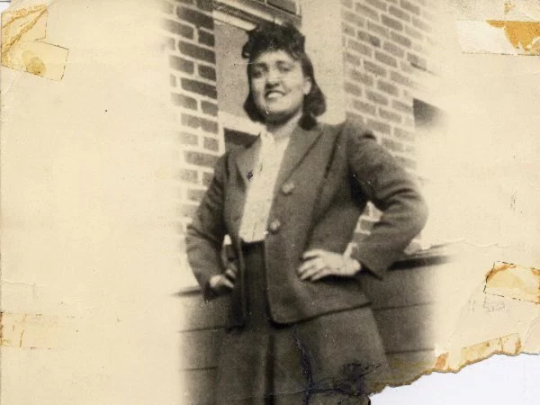
Henrietta Lacks was actually born Loretta Pleasant on August 1, 1920 in Roanoke, Virginia. Her parents were Eliza and Johnny Pleasant. Lawrence and Sony Lacks, Henrietta’s sons, told Denise Watson of the Virginian Pilot that they “aren’t sure how she became Henrietta, which was shortened to Hennie after her mother’s death when the girl was 4.[1]”
After her mother’s passing, Henrietta and her siblings — ten children in total — were distributed among nearby relatives in Clover, Virginia. She ended up with her grandfather and her first cousin, David. Sadie, another cousin, recalls Henrietta in her early years:
Sadie remembers Hennie as the most beautiful thing, with honey-colored skin, a round face and a smile that made boys act like fools.
Sadie said she was surprised when Hennie and David, who went by “Day,” started acting like a couple; they’d been raised like brother and sister.
But Lawrence was born to them in 1935 and Elsie four years later.[1]
Two years after Elsie’s birth, Henrietta and David married and moved to Maryland. David became a shipyard worker while Henrietta stayed at home to care for the kids. There, the couple bore three more children – Sonny (1947), Deborah (1949), and their final son Joe (1950).
Henrietta discovers a lump on her cervix
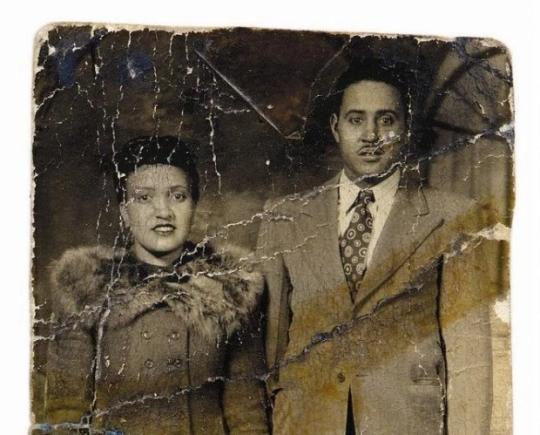
Henrietta Lacks.
In early 1951, Henrietta discovered a lump on her cervix while bathing. She went into Johns Hopkins — the only hospital that would treat black people at the time — to see what was wrong.
Dr. Howard Jones was the gynecologist on duty Feb. 1, 1951, in the outpatient center at Johns Hopkins when Henrietta Lacks came in.
Jones … examined her and saw something so peculiar it would stay with him for decades: A glistening, smooth growth that resembled purple Jell-O.
It was about the size of a quarter at the lower right of her cervix, and it bled easily when touched.
Jones thought it might be an infection and tested Lacks for syphilis, but the results came back negative. He ordered a biopsy – cutting away a small portion of the tissue – and within 48 hours had the diagnosis: cancer.
When Lacks returned for treatment eight days later, a second doctor sliced off another sliver of her tumor. Following the practice of the day, Lacks was not told.[1]
Henrietta, who had not yet informed her family of the diagnosis, returned home and went about business as usual. She continued to go to Johns Hopkins for radium treatments, but there was no improvement in her health. Soon the cancer would grow out of control and take over her body.
It was becoming difficult for her to hide the pain. Cousins would enter the house and hear her upstairs, wailing, “Oh, Lord, oh, Lord, I can’t get no ease! Jesus, help me, Jesus!”
On Aug. 8, shortly after her 31st birthday, she was readmitted to Johns Hopkins for what would be the last time.
Just after midnight on Oct. 4, 1951, Henrietta Lacks died. Doctors performed an autopsy that revealed firm white lumps studding her body, her chest cavity, lungs, liver and kidney. Her bladder appeared to be one solid tumor.[1]
The family learns about Henrietta’s “immortal” cells
Almost twenty years after Henrietta’s death, David and the children received an unexpected call that would further impact their lives:
Researchers wanted Sonny and other family members to give blood samples so more could be learned about their mother’s genetic makeup. The family wanted to know why.
Part of their mother, they were told, was alive and growing more than 20 years after her death. [1]
But how?
Tissue from their mother’s second biopsy in 1951 had been given to Johns Hopkins researcher Dr. George Gey, who for years had been trying unsuccessfully to grow human cells outside the body in his search for a cancer cure.
Technicians expected Lacks’ cells to do what previous samples had done: nothing, or perhaps live a few days then die. Instead, the cells multiplied in petri dishes, spreading and piling atop one another. Uncontrollable.
On the day Lacks died, Gey appeared on a television program called “Cancer Can Be Conquered.” He held Lacks’ cells in a bottle close to the camera and discussed his scientific breakthrough: the first human cell line ever grown.[1]
The fact that Henrietta’s cells had been taken without her knowledge and used in research for two decades was complete news to the Lackses. A mixture of anger, disappointment, and shock set into the family, and understandingly so.
Companies used HeLa to test cosmetics. … Scientists sent HeLa into space with white mice to determine what happened to human flesh at zero gravity. HeLa helped scientists discover genetic mapping. … According to the U.S. Patent and Trademark Office, there were close to 11,000 patents involving HeLa [in 2010]. The cells were so prevalent that they could be ordered by the vial on the Internet.
… [But, the family was] angry at Johns Hopkins because they felt the hospital removed her cells without her permission. …. They were enraged by biomedical companies that produced the cells like they were printing money and sold them for millions, while many in the family couldn’t afford health insurance. [1]
Henrietta’s family finally has a say
Nearly sixty years after Henrietta’s passing, the Lacks’ family was finally given a voice. The 2013 publication of the HeLa cell line genome sequence and the controversy that ensued prompted this moment.
… [The Lackses] will have some control over scientists’ access to the cells’ DNA code. And they will receive acknowledgement in the scientific papers that result.
The agreement came after the family raised privacy concerns about making Henrietta Lacks’ genetic makeup public. Since DNA is inherited, information from her DNA could be used to make predictions about the disease risk and other traits of her modern-day descendants.
Under the agreement, two family members will sit on a six-member committee that will regulate access to the genetic code. [2]
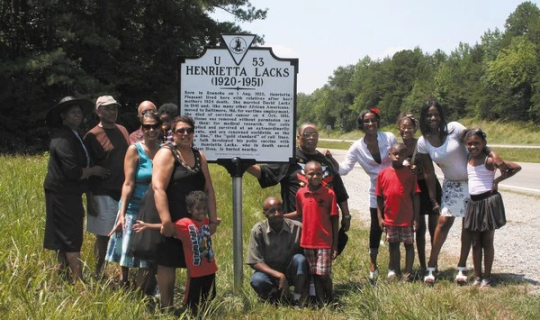
Henrietta Lacks’ family
The question of broad consent
Three years after this agreement, the use of Henrietta’s cells brought focus to proposed revisions to the Common Rule, a federal policy for the protection of human subjects. While there are mixed opinions about the effectiveness of new regulations, which would involve broad consent, there is still hope in some sort of balance between research and ethics in this regard:
Policy-makers face a daunting task: expedite development of new cures and treatments while staying vigilant against research abuses of human subjects. Addressing systemic inequity only adds to this challenge.
….
With real transparency and respect for equity, it’s possible the new Common Rule could align with the common good and make justice part of the Henrietta Lacks legacy. That would be a worthwhile transformation. [3]
Reforms to the Common Rule are anticipated by the end of 2016.
Her cells were used to develop the polio vaccine. As her cancer was most likely due to HPV, it’s fitting that they were also used to develop that vaccine, too, though the family should be entitled to a portion of the profit, imo.
I read The Immortal Life of Henrietta Lacks. I recommend it. It goes into a lot of depth on the issues the cells raise. The book may have also played a part in the family’s eventual ownership of the genetic code.
The part that amuses me is how the cells have actually spread into most human tissue samples. Most human cells have to be preserved just so. These cells need a medical exorcism to keep them from contaminating everything in the lab. Their growth rate is astonishing, even by modern standards.