all you need to know about america, folks.


Girls shouldn’t have their arms broken AT SCHOOL, BY THE POLICE OFFICERS, FOR DOING NOTHING
this is just another heartbreaking aspect of it all. school should be nurturing learning. you can’t nurture anything by breaking someone’s arm, and guess whose natural instinct to love learning has been shattered by some asshole with a power complex and a badge.
*cries*
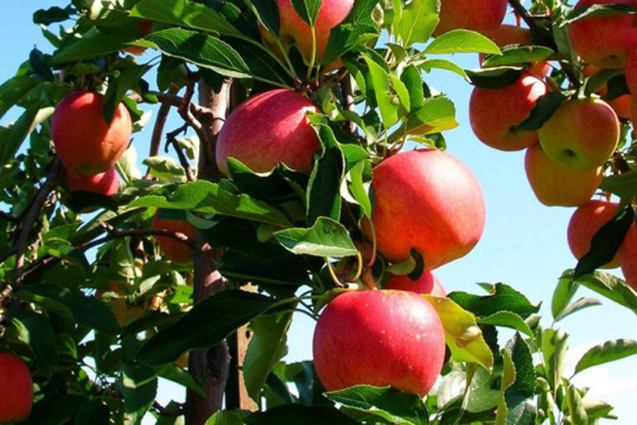
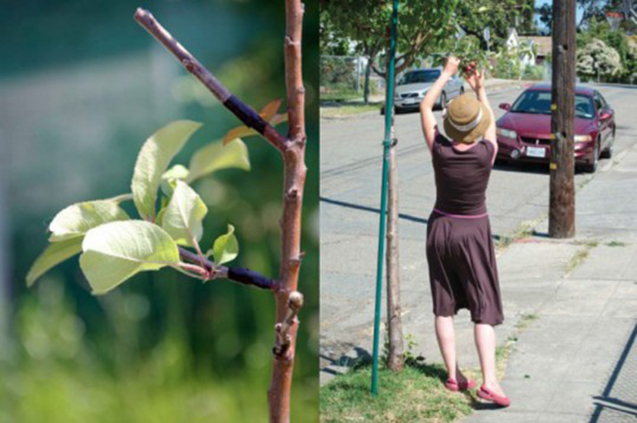
The streets of San Francisco are lined with pear, plum and apple trees thanks to ‘guerilla grafters’ secretly grafting fruit-bearing scions onto ornamental, non-fruit bearing trees making fresh fruit free and available to everyone who wishes to pick some.
‘All you have to do is make a slit with a knife in a branch on the host tree, insert a branch from a fruit-bearing tree, and secure it with tape. Once it heals, it connects.“ – Tara Hui started the movement and has been grafting fruit branches to city trees for two years now.
How great would it be to see free fruit from guerilla grafters growing in your city? Want to start a trend?
http://inhabitat.com/guerrilla-grafters-secretly-graft-fruit-bearing-branches-onto-san-francisco-trees/
Here is a link to the original articlebiodiverseed do you have any thoughts on this?
I wrote a response to this the first time I saw it going around; I’m not ‘against’ it per se, but I think as it’s presented here, it’s really misguided. This is not to say there couldn’t be awesome applications.
Basically, ornamentals are planted by roadways for a reason, and people could be destroying public infrastructure and creating waste by doing this. Very few people want to eat roadside fruit, and even if they need free fruit, they shouldn’t have to pick it by the roadside, where it is covered in particulate emissions, and it might be embarrassing for them. At least do it in a park, or somewhere where it’s safer and more hygienic.
Grafting a vigorous heavy fruit-bearing branch onto a small ornamental (like a crabapple) also means the branch will require pruning and maintenance. A lot of these ‘guerrilla farming’ things are just about dumping seeds (or grafts) in a place, and then deliver no follow-through.
Anyways, that’s just my opinion. Your mileage may vary.
ETA: Wrong link in the first sentence, it’s corrected now
Sigh. People mean well.
If I’d tried to pick fruit off a tree by the side of the road as a kid, my mother would have worried that it was poisonous, or full of worms, or dirty, or polluted, or most definitely illegal. We were on food stamps at the time, so it’s not like we didn’t need it, but picking fruit from trees on the street was not going to happen. (We had two apple trees, as it happens. They were chock full of worms, every year. We certainly had no money for sprays. We did not eat them.) Picking fruit from street trees was just…not something we would have considered. It wasn’t pride. It was that this was not perceived as food.
It reminds me of “guerrilla gardening,” where people think that they’ll build a garden in an empty lot and then abandon it, claiming that local homeless people (usually not consulted) will take care of it. Well…I can’t swear that it’s never happened, but color me skeptical. Gardening requires a great deal of investment, in love and labor, and that you can just plunk plants down in beds and walk away and assume someone will step in with the know-how and the desire and the physical capacity to haul water from god-knows-where, strikes me as a trifle…ah…let me be kind and say “optimistic.” (I could be unkind and say a lot of other words, but I won’t.)
BUILDING a garden is the easy part. Really. It’s fun. It’s putting a plant in dirt (or hauling in the dirt in the first place) and saying “Look what I did!” It’s twenty bucks worth of starts at the store and ten bucks worth of 2x4s at Habitat and a couple bags of dirt and a warm glow of satisfaction.
Caring for the garden in the long term–the grim battle with weeds, the pests, the pruning, figuring out where the water’s coming from, basically, yes, the follow through…that’s gardening. The bits where it’s not always fun any more. The bits that don’t always come with the warm glow. The bits where you swear a lot. Look, I don’t particularly enjoy yanking out Japanese stiltgrass, but I do it because A) no one else will and B) I have the knowledge to know a weed from a food plant. Which, these days, is specialized knowledge.
The bit where people casually do a thing and then walk away forever, feeling a warm glow that they have Made The World A Better Place With Food Plants…sigh.
You don’t fix a food desert by grafting a street tree or planting squash in an empty lot. (Oh god! If only! I could save half the goddamn world singlehandedly if that was all it took!) There is an enormous gulf of education and skillset and care and even the culture of what constitutes food that has to be bridged. There is work that has nothing to do with moving dirt around.
The people who are making this sort of thing work build gardens, but then they teach people how to work them. They don’t just do it and walk away. They are better and kinder and more patient people than I am–I’m a crotchety middle-aged woman with an ancient beagle and I like humans better if there’s a keyboard between us. But those people, I think, are closer to saving the world than those of us who plant a thing and walk away and expect that someone else will pick up where we left off and then our work is done.

Brooklyn Public Library has the best post ever. Punk. The Man. Cuss words. Every i with a heart.
On Wednesday, the investigative news site the Intercept published a story based on a collection of 70 million call records taken from a database of Securus, a Dallas, Texas-based company that provides phone service to more than 2,200 prisons around the United States. The database, which the Intercept says was stolen from Securus by a hacker, shows that the company keeps records of every phone call made by the more than 1.2 million inmates who use the service in 37 states, including the time, phone numbers called, inmate names, and even the audio recordings of every call. Those records are routinely sold to law enforcement customers, according to the Intercept’s reporting, and most damningly, include inmate conversations with lawyers that are meant to be protected by the privacy of attorney-client privilege. “This reveals exactly how much surveillance is going on in the criminal justice system,” Jordan Smith, a co-author of the story, tells WIRED. “Many of these calls should never have been recorded in the first place.”
SecureDrop Leak Tool Produces a Massive Trove of Prison Docs | WIRED (via songscloset)